Southern California is known for its warm weather, sunny days, and hot summer temperatures. While homeowners often focus on insulating their roofs, walls, and windows, the garage door is another important area that should not be overlooked. An uninsulated garage door can allow outdoor heat to enter the garage, making the space uncomfortable and potentially affecting nearby rooms.
This is why many homeowners consider insulated garage doors when planning a garage door upgrade. But are they worth the additional investment in Southern California? The answer depends on how you use your garage, your home's layout, and your comfort and energy-efficiency goals.
In this guide, we explain how insulated garage doors work, their benefits, R-values, and when upgrading makes sense for homeowners in Orange County and surrounding areas.
What Are Insulated Garage Doors?
Insulated garage doors are designed with insulating material between or within their panels. This material helps slow down heat transfer between the indoor and outdoor environments.
Most insulated garage doors use one of two common materials:
- Polystyrene insulation: Rigid foam panels placed inside the garage door sections. They provide insulation and can improve the door's overall structure.
- Polyurethane insulation: Foam injected between the door panels. It expands to fill the space and generally provides better insulation per inch than polystyrene.
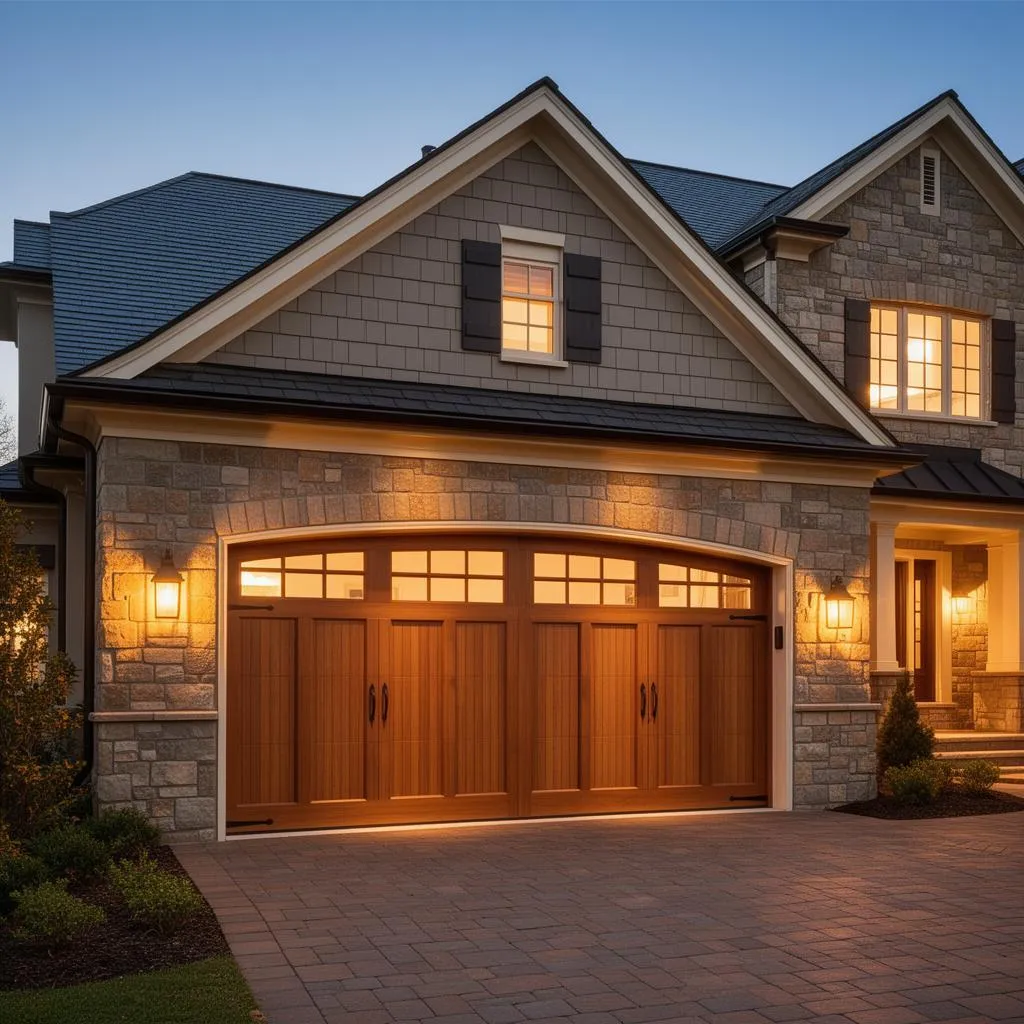
Unlike basic non-insulated doors, insulated models are designed to help maintain more stable temperatures inside the garage. They can also reduce outside noise and provide additional panel strength.
Homeowners comparing garage door installation options should consider the insulation material, door construction, and expected performance before choosing a model.
Benefits of Garage Door Insulation
Adding insulation to a garage door can provide several practical benefits, particularly in areas that experience high summer temperatures.
Better Temperature Control
During Southern California summers, direct sunlight can heat a garage significantly. An insulated garage door helps slow the transfer of outdoor heat into the garage.
Although insulation cannot make a garage as cool as an air-conditioned room, it can help reduce temperature fluctuations. This may make the space more comfortable for everyday activities.
Improved Energy Efficiency
If your garage shares walls with living areas, heat entering through the garage door may affect nearby rooms. Insulation can help reduce heat transfer, which may support your home's overall energy-efficiency goals.
The actual energy savings depend on several factors, including your home's construction, ventilation, air sealing, and cooling system. An insulated garage door is one part of a larger approach to improving home comfort.
Reduced Outside Noise
Insulated garage doors can help reduce the amount of outdoor noise entering the garage. This can be useful for homes near busy roads, neighborhoods with regular traffic, or areas with frequent outdoor activity.
The level of noise reduction depends on the door's construction, insulation type, and how well the door seals around its edges.
Stronger and More Durable Construction
Many insulated garage doors have multiple layers that make their panels more rigid than basic single-layer doors. This added construction can help the door resist everyday wear and maintain its shape during regular operation.
However, durability also depends on the quality of the materials, installation, hardware, and maintenance.
More Comfortable Garage Space
Some homeowners use their garages for exercise, hobbies, storage, or small projects. An insulated garage door can help make the space more comfortable by reducing temperature changes and outside noise.
If you spend time in your garage, these improvements may make the additional investment more worthwhile.
Insulated vs. Non-Insulated Garage Doors
Before choosing a new garage door, it is helpful to understand the main differences between insulated and non-insulated models.
| Feature | Insulated Garage Doors | Non-Insulated Garage Doors |
|---|---|---|
| Temperature control | Helps reduce heat transfer | Offers limited temperature protection |
| Energy efficiency | Can support home efficiency | Provides little insulation |
| Noise reduction | Generally better | Generally lower |
| Construction | Often stronger, multi-layer panels | Commonly single-layer panels |
| Initial cost | Usually higher | Usually lower |
| Best suited for | Attached garages and frequently used spaces | Detached or rarely used garages |
An insulated model may be a better choice for an attached garage, especially when rooms are located directly above or beside it. A non-insulated door may be sufficient for a detached garage that is mainly used for vehicle storage.
What Is Garage Door Insulation R-Value?
R-value measures how well an insulating material resists heat flow. Generally, a higher R-value means better insulation performance.
When comparing garage doors, you may see different R-value ratings depending on the insulation material and door construction.
For Southern California homeowners, the right R-value depends on how the garage is used and how the home is designed. A higher rating may be useful when the garage is attached to the house or used as a workspace.
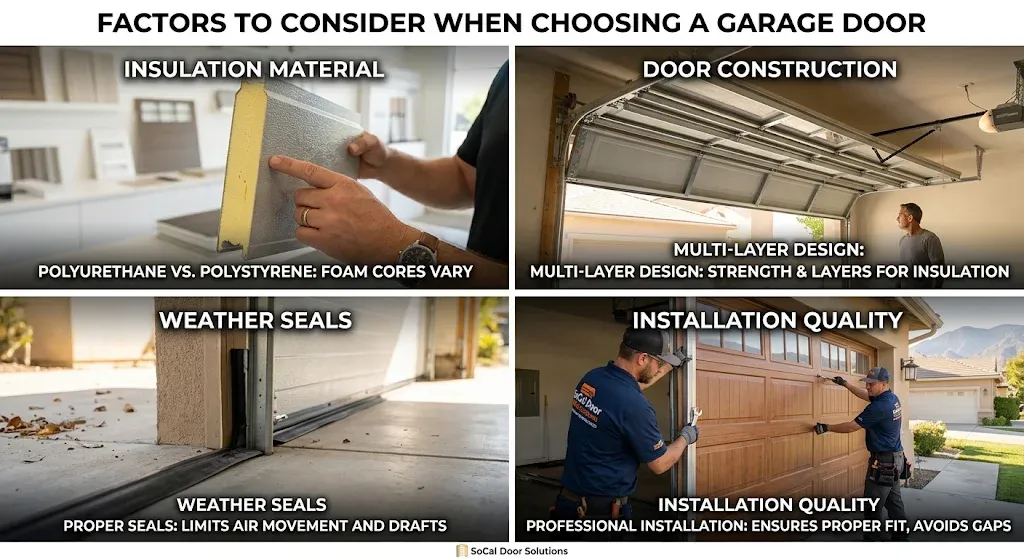
However, R-value should not be the only factor in your decision. Consider the following:
- Insulation material: Polyurethane and polystyrene have different insulating properties.
- Door construction: Multi-layer designs can provide additional strength and insulation.
- Weather seals: Proper seals around the sides and bottom help limit air movement.
- Installation quality: Gaps or poor alignment can reduce the door's overall performance.
Choosing a door with suitable insulation and professional installation can help you get better results.
Are Insulated Garage Doors Worth the Investment in California?
For many Southern California homeowners, insulated garage doors can be a worthwhile investment. However, the value depends on the home's layout, garage usage, and individual priorities.
An insulated garage door may be especially beneficial if:
- Your garage is attached to your home.
- Bedrooms or living areas are located above or beside the garage.
- You use the garage as a workshop, gym, or hobby space.
- Your current garage door allows noticeable outdoor noise inside.
- You want a stronger door with improved insulation.
On the other hand, homeowners with detached garages that are rarely used may not notice enough difference to justify the additional cost.
It is also important to understand that insulation alone does not guarantee lower energy bills. Proper ventilation, weather sealing, and home insulation all contribute to overall efficiency.
Before making a decision, compare the initial price with the long-term benefits you expect from improved comfort, noise reduction, and door construction.
When Should Homeowners Consider Upgrading?
If your existing garage door is old, damaged, or no longer meets your needs, upgrading may be worth considering.
Here are some common signs that it may be time for a new garage door:
Your Garage Becomes Extremely Hot
If your garage becomes uncomfortable during summer, an insulated model may help reduce heat transfer through the door.
Your Garage Door Has Visible Damage
Bent panels, rust, cracks, or worn sections can affect the door's appearance and performance. In some cases, replacing the door is a more practical option than continuing repairs.
Your Garage Is Attached to Your Home
An attached garage can transfer heat and noise to nearby living spaces. Insulation may help improve comfort in these areas.
Your Current Door Is Noisy or Outdated
Older doors may have basic construction and worn components. A newer insulated model can offer updated materials and improved performance.
If your existing door has reached the end of its useful life, exploring professional garage door replacement services can help you compare suitable options for your home.
Practical Tips for Choosing an Energy-Efficient Garage Door
Choosing the right insulated garage door involves more than selecting the highest R-value. Keep these practical points in mind:
Compare insulation types: Review polyurethane and polystyrene options to understand their performance and construction.
Check the R-value: Choose a rating that suits your garage's use and your home's layout.
Look at panel construction: Multi-layer doors may provide better rigidity and insulation than basic single-layer models.
Inspect weather seals: Make sure the bottom seal and perimeter weatherstripping fit properly.
Consider professional installation: Correct installation helps the door operate smoothly and reduces unwanted gaps.
Plan regular maintenance: Springs, rollers, tracks, and other components need periodic inspection to support safe and reliable operation.
Regular professional garage door maintenance can help identify worn parts, alignment problems, and damaged seals before they lead to bigger issues.
Why Choose the First Garage Door?
Choosing the right garage door is an important decision for your home's comfort, appearance, and everyday convenience. First Garage Door helps homeowners explore garage door solutions based on their property requirements and preferences.
Whether you are considering a new insulated door or replacing an older model, professional guidance can help you understand available materials, insulation options, and installation requirements.
A properly selected and installed garage door can improve everyday usability while complementing your home's exterior.