Garage door springs play an important role in lifting and lowering a garage door safely. The two most common systems are torsion springs and extension springs. The main difference is how they store and release energy: torsion springs twist around a shaft, while extension springs stretch along the horizontal tracks. Both systems help balance the door, but they differ in design, performance, safety, lifespan, and replacement costs. Understanding torsion vs. extension garage door springs can help homeowners choose the right system for their garage. This guide explains how each type works, how to identify it, and which option may be better for your home.
Torsion vs. Extension Garage Door Springs: Quick Comparison
Torsion and extension springs perform the same basic job, but their designs and operating methods are different. The following table highlights their main differences.
| Feature | Torsion Springs | Extension Springs |
|---|---|---|
| Location | Above the garage door opening | Along both sides of the horizontal tracks |
| Operation | Twist to store and release energy | Stretch and contract to store and release energy |
| Safety | Generally more controlled when properly installed | Requires safety cables for spring containment |
| Lifespan | Often offers a higher cycle rating | Often has a lower cycle rating |
| Cost | Usually higher initial replacement cost | Often less expensive initially |
| Balance | Provides controlled and even lifting | Uses spring tension and pulley systems |
| Headroom | Requires suitable space above the door | Can work in garages with limited overhead space |
Torsion springs are often preferred for their controlled operation, durability, and higher cycle options. However, extension springs can remain a practical and affordable choice for compatible garage doors. The better system depends on the door's weight, available space, existing hardware, and homeowner's needs.
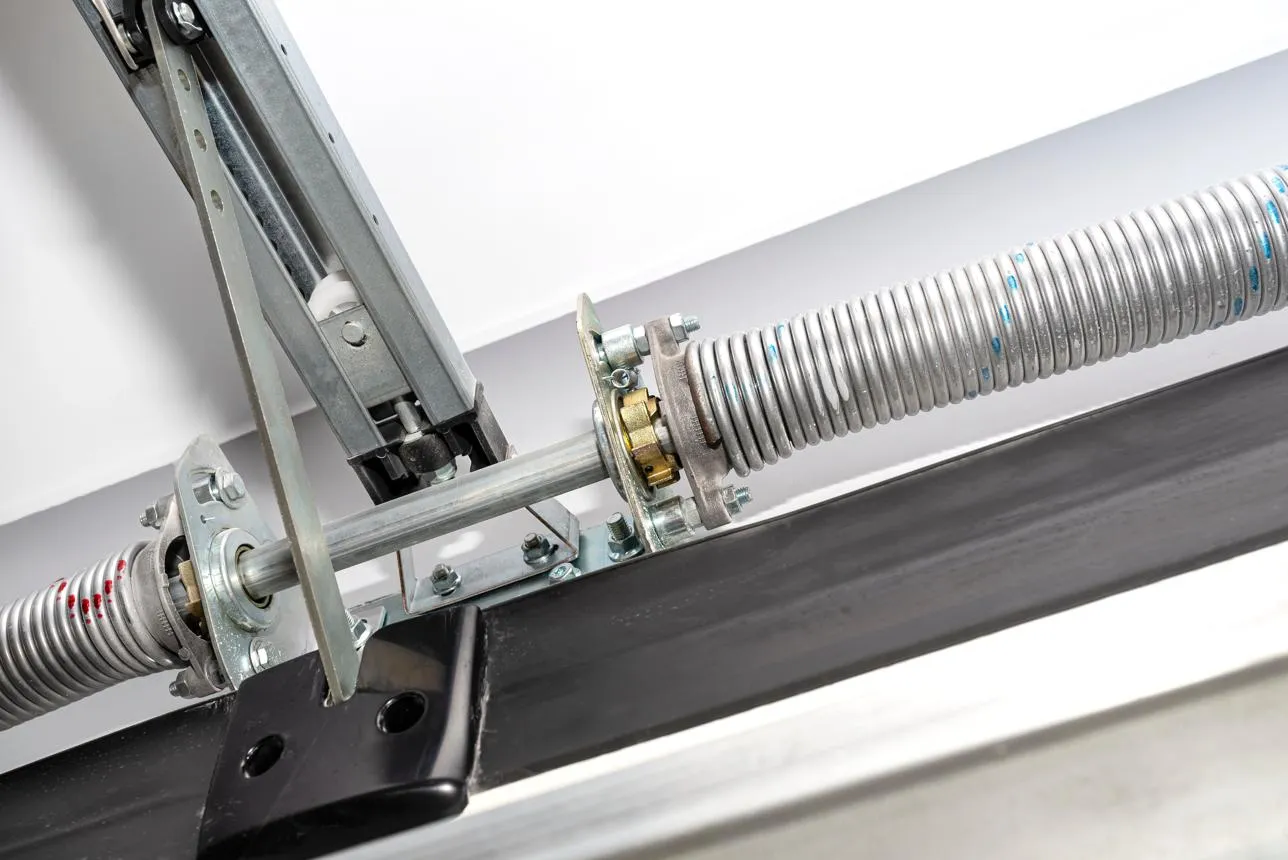
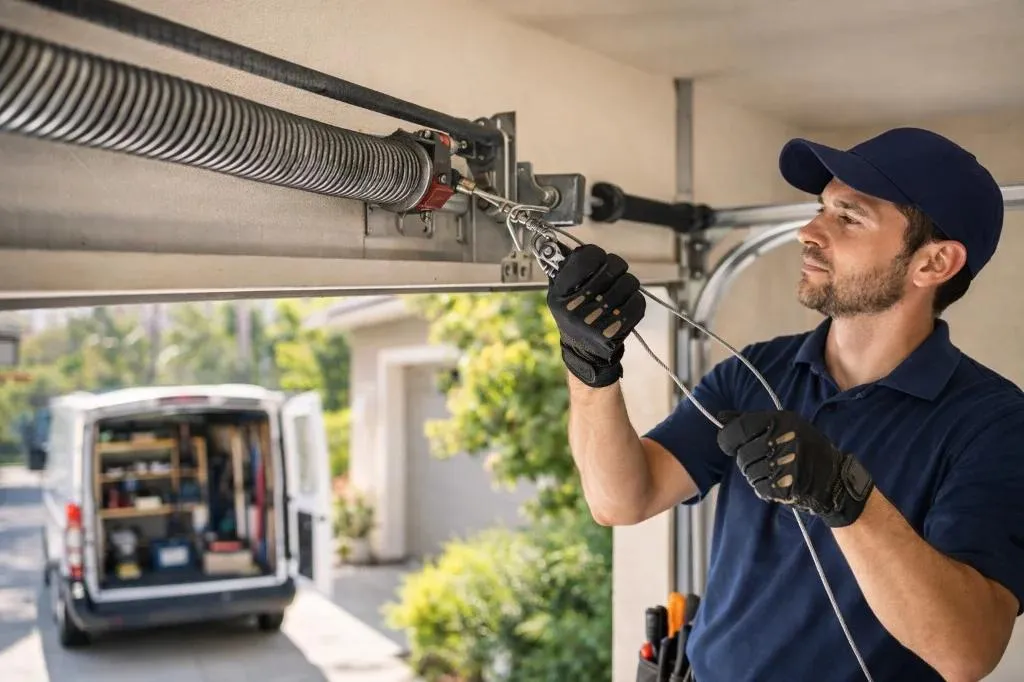
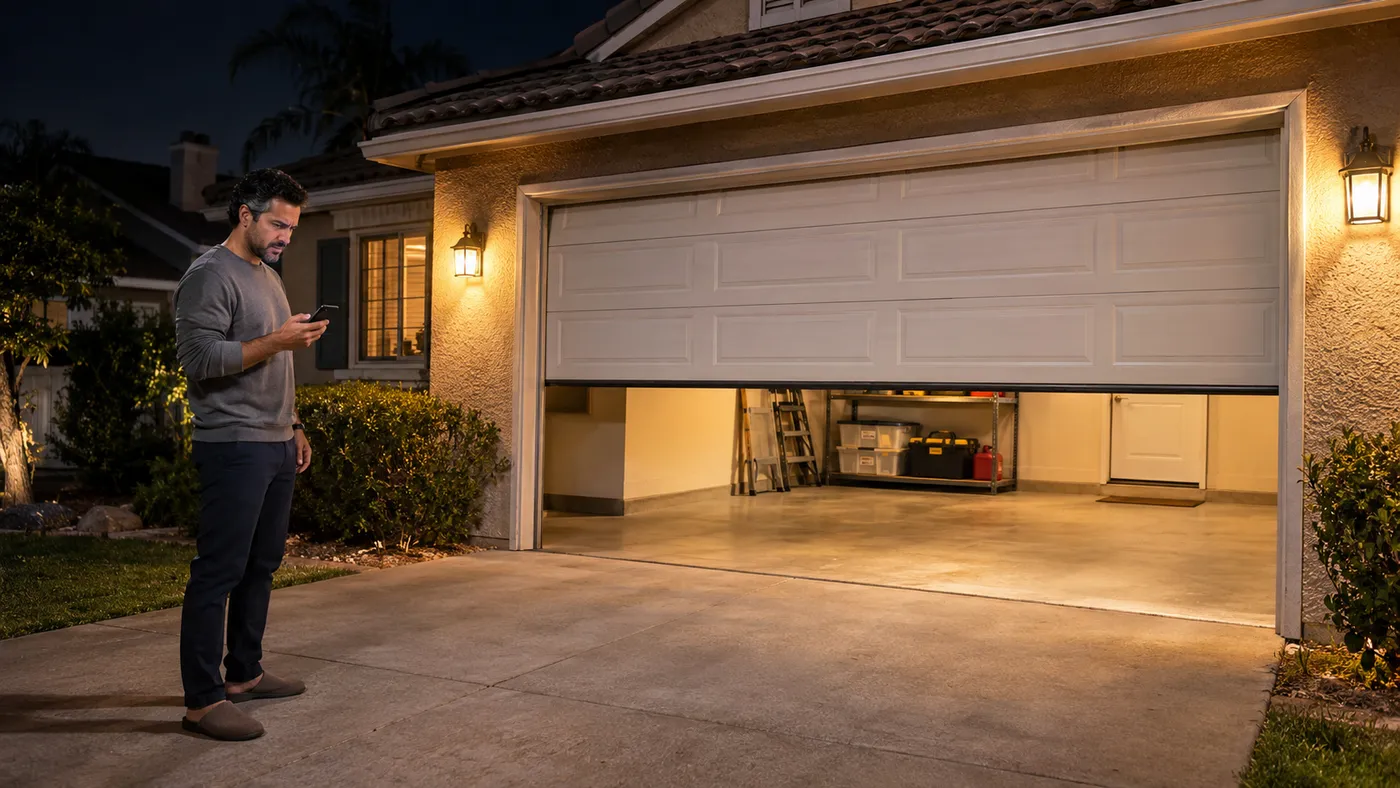
🚨 Emergency Garage Door Issue? If you heard a loud "bang" from your garage, or if your door only opens a few inches and stops, you likely have a broken spring. Do not attempt to lift the door manually. Call our Orange County technicians for same-day spring repair.
How Do Torsion and Extension Garage Door Springs Work?
Both spring systems counterbalance the weight of a garage door. Without properly functioning springs, the garage door opener would have to handle much more weight than it is designed to lift. However, torsion and extension springs achieve this balance through different mechanical designs.
Torsion Springs: Location and Operation
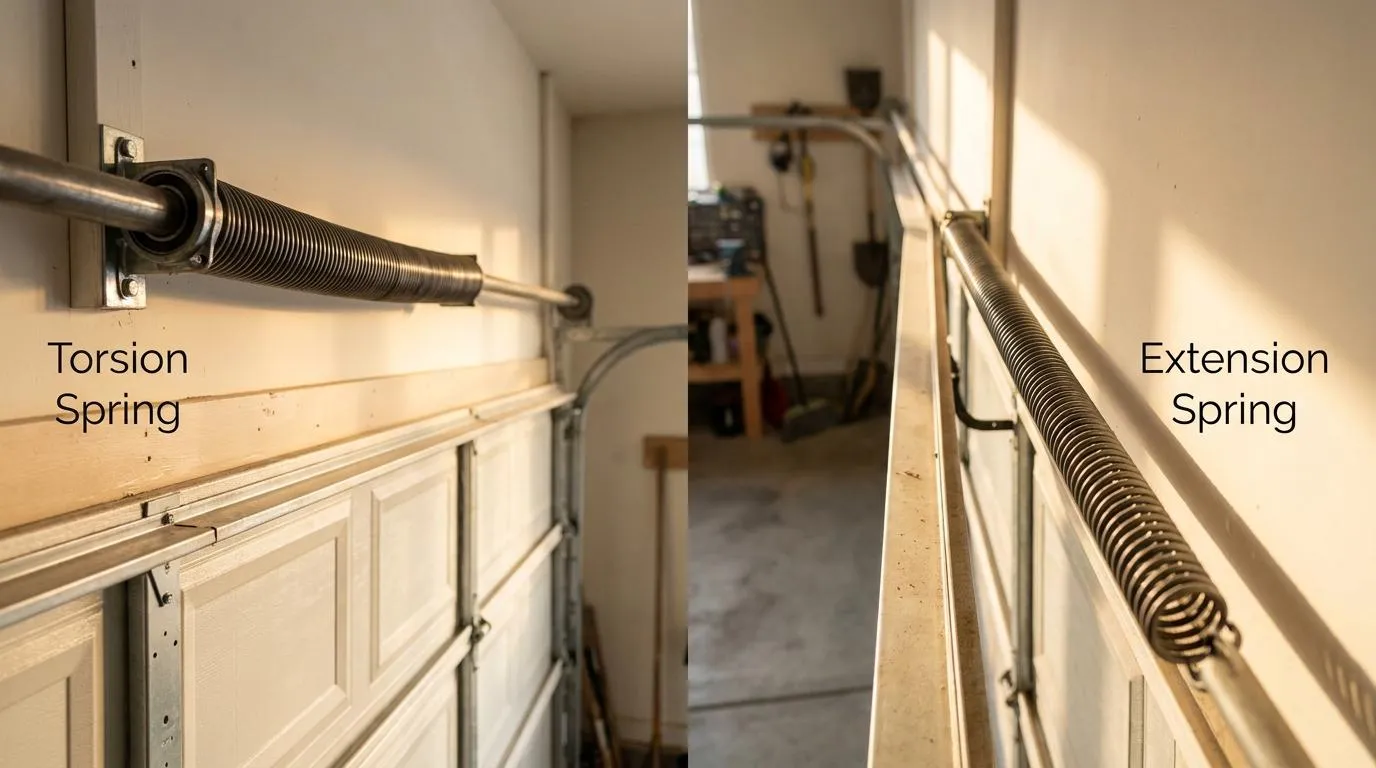
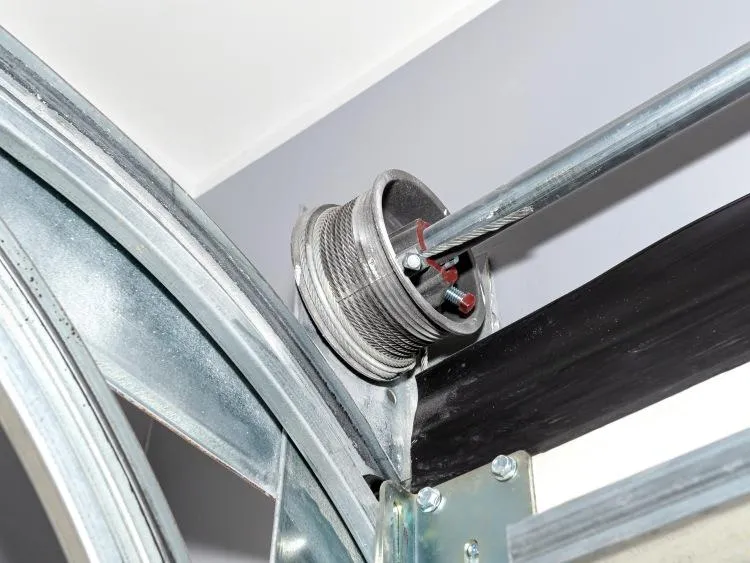
Torsion springs are typically installed above the garage door opening on a metal shaft. Depending on the door's design and size, a system may use one or two springs.
These springs work through twisting motion. When the garage door closes, the springs store mechanical energy. When the door opens, that stored energy is released to help lift the door.
The torsion shaft connects to cable drums positioned near the ends of the shaft. Lifting cables wrap around these drums and connect to the bottom brackets of the garage door. As the door moves, the drums manage cable movement while the springs help counterbalance the door's weight.
One advantage of this design is its controlled lifting action. A properly matched torsion spring system can help maintain consistent door balance and smooth operation.
Extension Springs: Location and Operation
Extension springs are generally installed along the horizontal tracks on both sides of the garage door. Unlike torsion springs, they work through stretching and contracting.
When the garage door closes, the extension springs stretch and store energy. As the door opens, they contract and release that energy to help lift the door.
Extension spring systems use pulleys and lifting cables to transfer force to the door. Their performance depends on correctly matched springs, suitable hardware, and properly functioning safety components.
Although extension springs can provide reliable performance, their exposed design makes safety cables especially important. These cables help contain a spring if it breaks.
How Can You Tell Which Garage Door Springs You Have?
Identifying your garage door spring type is usually possible through a visual inspection from a safe position on the ground.
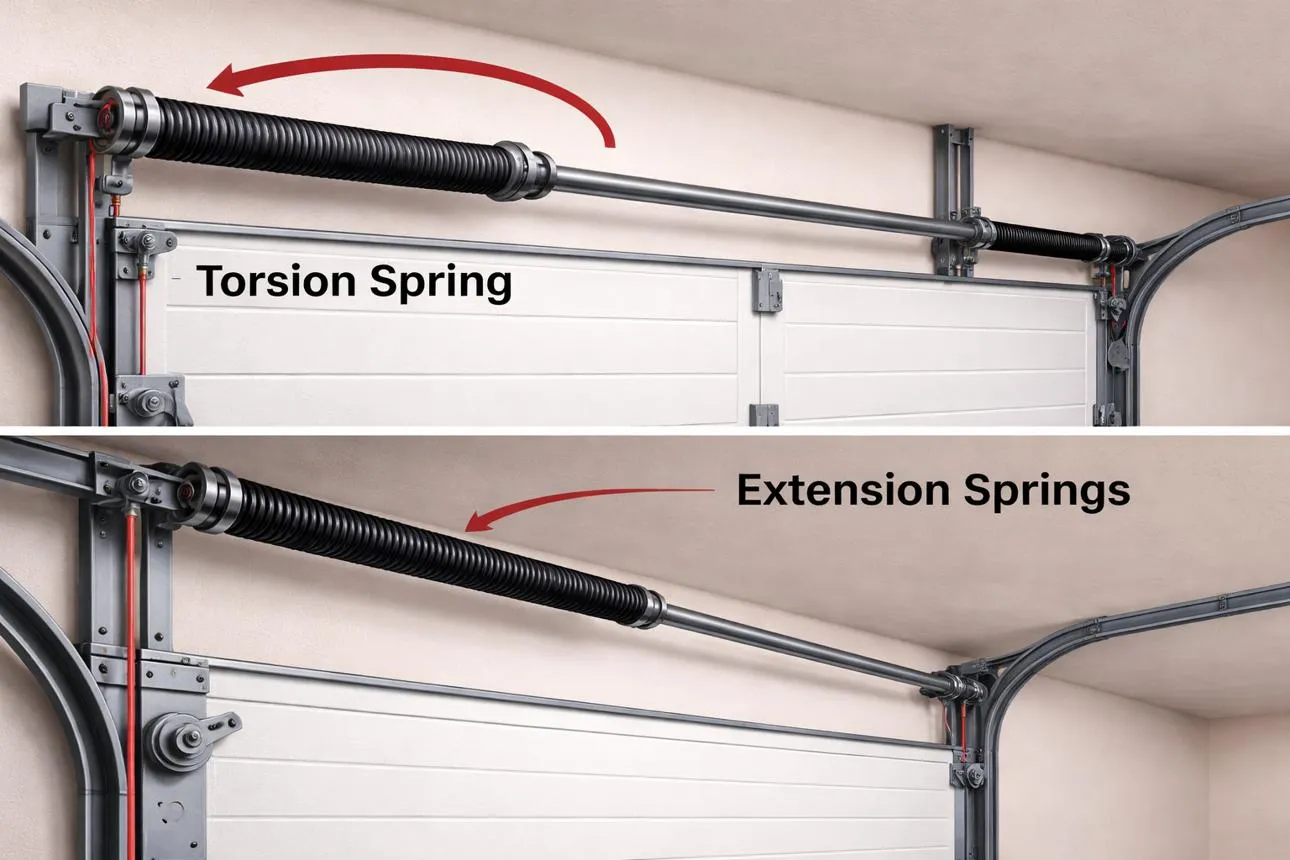
If you see a long metal shaft with one or two coiled springs above the garage door opening, your system likely uses torsion springs. If you notice elongated springs running along the horizontal tracks on either side of the door, you probably have extension springs.
Some modern garage doors use enclosed or concealed spring systems, which can make identification more difficult. In these cases, the spring components may not be immediately visible.
Safety Note: Never touch, pull, loosen, or dismantle spring components to identify them. Both spring types can hold significant mechanical tension, even when the door is not moving. If you cannot identify your system safely, ask a qualified garage door technician to inspect it.
Torsion vs. Extension Springs: Which Lasts Longer?
Spring lifespan is an important consideration when comparing garage door systems. In many residential applications, torsion springs offer a higher cycle rating than standard extension springs. However, actual performance depends on spring quality, sizing, installation, and usage.
While every door is different, garage door spring replacement in Orange County typically costs between $150 and $250 for extension springs, including parts and labor. Because torsion springs require exact sizing and are heavier-duty, replacement generally ranges from $200 to $350. Converting an old extension system to a new torsion system usually starts around $400 to $800, depending on the hardware required.
A spring cycle means one complete opening and closing of the garage door. For example, if a homeowner opens and closes the garage door twice daily, the system completes two cycles each day.
Spring cycle ratings vary by manufacturer and product specifications. Standard residential springs may have ratings around 10,000 cycles, while higher-cycle options can be designed for substantially more use.
Several factors affect how long garage door springs last:
- Door usage: Frequently used garage doors complete more cycles and experience more wear.
- Corrosion (The Orange County Factor): Because many Orange County homes (especially near coastal areas like Newport Beach or Huntington Beach) deal with salt air and coastal humidity, exposed metal rusts faster. Extension springs are highly exposed to this moisture. Upgrading to a galvanized torsion spring system is often a smarter long-term investment to prevent premature rust and snapping.
- Door weight: Incorrectly matched springs may experience additional stress.
- Installation quality: Proper spring sizing and professional installation support reliable performance.
- Maintenance: Regular inspections can help identify wear before it causes unexpected problems.
Common warning signs include unusual noises, uneven door movement, visible spring gaps, and difficulty opening or closing the door. A broken spring requires professional attention.
For more information about expected service life, read our guide to garage door spring lifespan.
Regular garage door maintenance can also help identify developing issues and support the overall performance of the system.
Which Garage Door Spring System Is Safer?
Both torsion and extension spring systems can operate safely when they are correctly designed, installed, and maintained. However, their different mechanisms create different safety considerations.
Torsion Spring Safety
Torsion springs are mounted on a shaft above the garage door opening. This arrangement helps keep the spring assembly in a controlled position during normal operation.
However, torsion springs store substantial mechanical energy. A damaged spring or improperly handled component can cause serious injuries. Even a spring that appears stationary may remain under considerable tension.
For this reason, spring adjustment, removal, and replacement should always be handled by a trained garage door professional.
Extension Spring Safety Cables
Extension springs are located along the horizontal tracks, where they stretch during door operation. If one breaks, the spring can move unexpectedly.
Safety cables help reduce this risk by running through the extension springs and providing a containment path if a spring fails.
These cables are essential safety components, not optional accessories. Missing, damaged, or improperly installed cables can increase the risk associated with a broken extension spring.
What to Do if a Spring Breaks
If you suspect a garage door spring has broken, stop operating the door immediately. Keep children, pets, and other household members away from the garage door and its spring components.
Avoid using the automatic opener or attempting to lift the door manually. Do not attempt to adjust, remove, or replace the spring yourself.
If you need to understand the risks of operating a damaged door, read our guide on opening a garage door with a broken spring.
Contact First Garage Door for emergency garage door spring repair in Orange County. Our qualified technicians will safely secure the heavy door, inspect the counterbalance system, and replace the broken springs on the spot.
Torsion vs. Extension Spring Replacement Costs
Replacement costs depend on the spring system, garage door design, hardware condition, and labor requirements. In general, extension spring systems may have a lower initial replacement cost because their components and installation requirements are often simpler.
Torsion spring replacement can cost more because the system may require specific spring sizing, shaft compatibility, and additional hardware considerations. However, its higher cycle options may offer better long-term value for some homeowners.
Several factors influence the final service quote:
- Number of springs: The system may use one or two springs, depending on its design.
- Spring size: Door weight and dimensions influence the required spring specifications.
- Hardware condition: Worn cables, drums, brackets, or other components may need attention.
- Labor: The complexity of the system and installation affects service costs.
- Accessibility: Limited workspace or unusual garage configurations can increase labor requirements.
There is also a difference between standard spring replacement and converting an extension spring system to torsion springs. A conversion involves additional components and labor, so it generally costs more than replacing springs within the existing system.
Homeowners should request an inspection and written estimate before approving work. A professional quote should explain the required parts, labor, and any additional hardware costs.
Can You Convert Extension Springs to Torsion Springs?
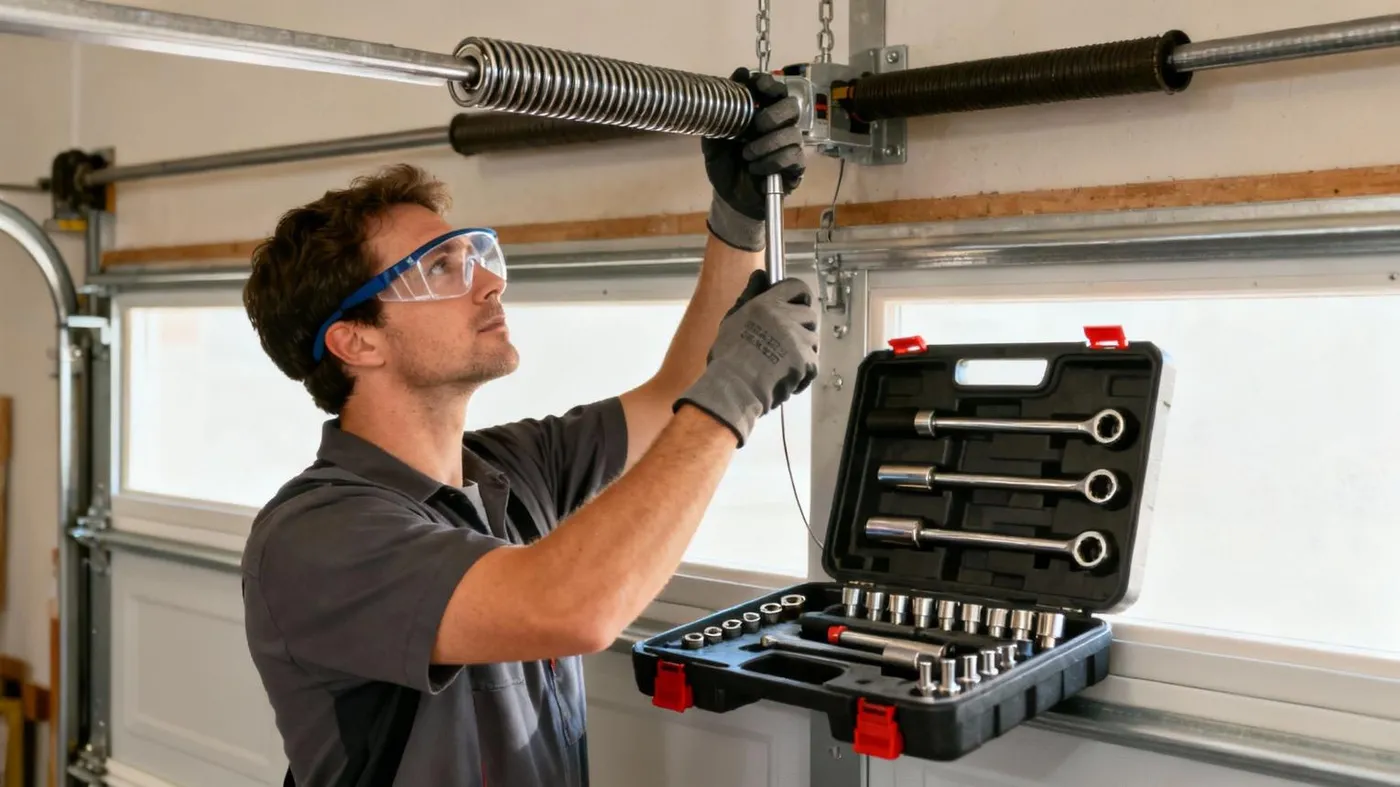
Yes, many garage doors with extension spring systems can be converted to torsion spring systems. However, conversion is not suitable for every garage door. The door's construction, available overhead space, track arrangement, and weight must be evaluated first.
A torsion spring system generally requires adequate headroom above the garage door opening. The technician must also consider the compatibility of the door and its supporting hardware.
A typical conversion may involve several components:
- A compatible torsion shaft.
- Properly sized torsion springs.
- Compatible cable drums.
- Appropriate lifting cables.
- Suitable mounting brackets and supporting hardware.
The existing extension spring arrangement must also be evaluated to determine whether the door can accommodate the new system.
Conversion should not be treated as a simple spring replacement. It involves changing the door's counterbalance arrangement, and incorrect component selection can affect door balance and safe operation.
A professional technician can assess whether conversion makes sense for your garage. They can also compare the expected costs and benefits of keeping the existing system against installing a torsion spring setup.
Which Garage Door Spring Type Is Better for Your Home?
There is no single spring system that works best for every garage door. The right option depends on your garage layout, door specifications, usage, and budget.
When Torsion Springs May Be the Better Choice
Torsion springs may be a suitable option for homeowners who want controlled door movement, higher cycle options, and consistent balance. They are commonly used in modern residential garage doors and can provide reliable long-term performance when properly sized and maintained.
They may also be worth considering for households that use their garage doors frequently throughout the day.
When Keeping Extension Springs Makes Sense
Extension springs can remain a practical choice when the existing system is compatible with the door and functions correctly.
They may be suitable for homeowners who want to maintain their current setup rather than pay for a complete conversion. They can also work in certain garage configurations where overhead space is limited.
However, the system must have appropriate safety cables and properly maintained hardware.
Ultimately, the best choice depends on the garage door's requirements rather than simply choosing the more expensive system. A professional inspection can help homeowners make an informed decision.