Your garage door opens and closes every day, often without much thought. You leave for work, return home, run errands, and sometimes use the garage as your main entrance. Behind every smooth movement is a spring system doing much of the heavy lifting.
But garage door springs don't last forever.
Over time, repeated use places stress on the metal, and eventually, the springs can lose their ability to support the door properly or break without much warning.
So, how long do garage door springs last?
Many standard residential garage door springs are designed for approximately 10,000 opening-and-closing cycles. Depending on how frequently you use your garage, that could mean around 7 to 14 years with lighter or moderate use, or considerably less in a busy household.
The challenge is that springs don't always show obvious signs before failing. Some homeowners notice unusual noises or changes in door movement, while others discover a broken spring when the garage door suddenly refuses to open.
Knowing what affects garage door spring lifespan and recognizing potential warning signs can help you make better maintenance decisions and avoid unexpected access problems.
What Is the Average Lifespan of a Garage Door Spring?
Garage door spring lifespan is usually measured in cycles rather than calendar years.
One cycle means the garage door opens completely and then closes completely. Every time you leave your garage and later close the door, you've completed one cycle.
A standard residential spring may be rated for approximately 10,000 cycles, while certain high-cycle springs are designed for 20,000, 25,000, or more cycles.
How many years those ratings represent depends largely on your daily routine.
| Daily Garage Door Cycles | Approximate Lifespan of a 10,000-Cycle Spring |
|---|---|
| 2 cycles per day | 13.7 years |
| 3 cycles per day | 9.1 years |
| 4 cycles per day | 6.8 years |
| 6 cycles per day | 4.6 years |
| 8 cycles per day | 3.4 years |
These figures are mathematical estimates, not guarantees. Actual spring life depends on proper installation, door weight, operating conditions, corrosion, and other factors.
For example, a homeowner who uses the garage twice daily may get considerably more years from the same spring than a household where several family members regularly come and go.
This is why spring age alone isn't enough to determine whether replacement is necessary.
If your garage door has become unusually heavy, difficult to operate, or inconsistent in its movement, professional garage door spring repair in Orange County can help identify whether the springs or another part of the lifting system need attention.
Torsion vs. Extension Springs: Do They Last the Same Amount of Time?
Not all garage door spring systems are designed the same way.
Most residential garage doors use either torsion springs or extension springs. Both counterbalance the door's weight, but they operate differently.
Torsion Springs
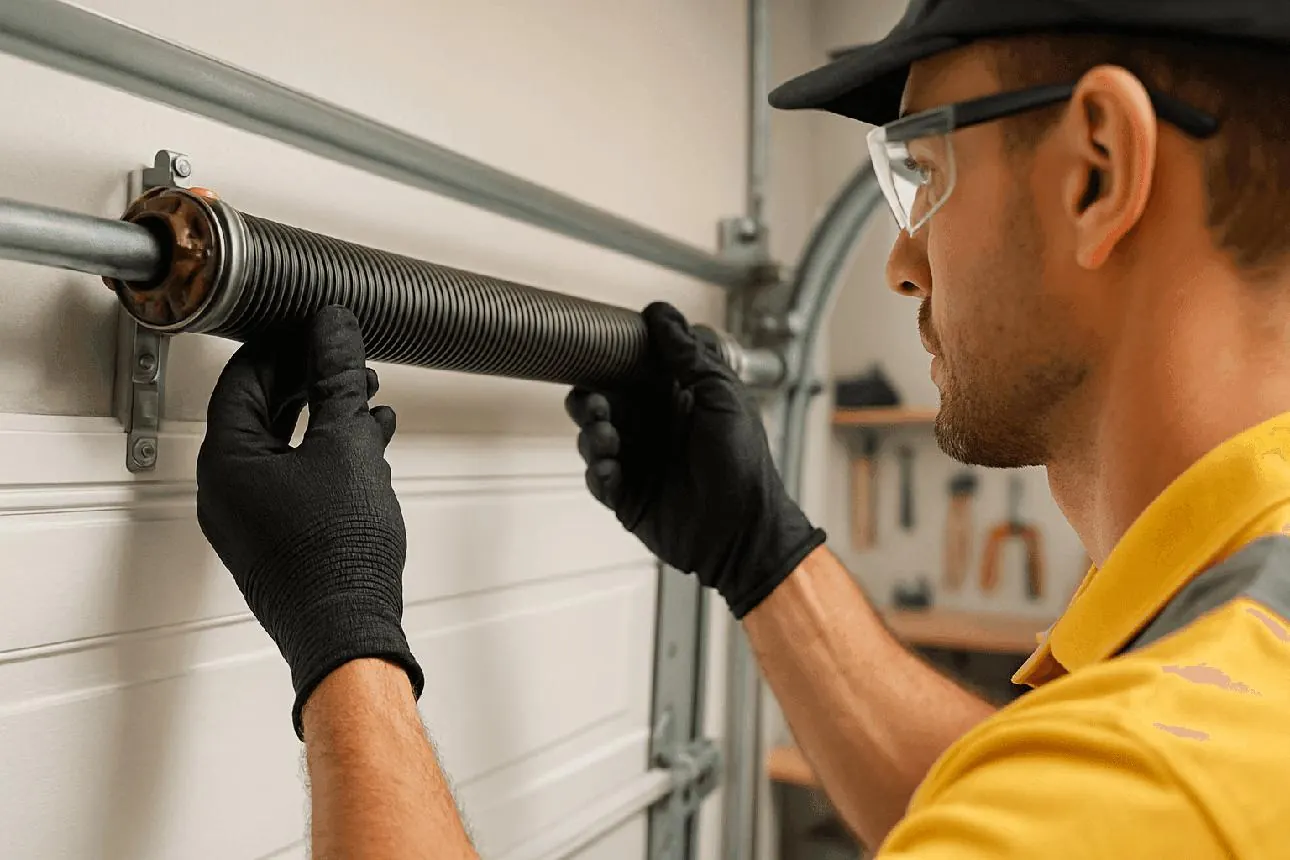
Torsion springs are typically mounted on a shaft above the garage door opening.
As the door closes, the springs wind and store mechanical energy. When the door opens, that stored energy helps lift the door.
Torsion springs are common on modern residential sectional garage doors, including many homes throughout Irvine, Tustin, Anaheim, and surrounding Orange County communities.
Their lifespan depends on the spring's design, cycle rating, correct sizing, and operating conditions. Standard versions commonly have ratings around 10,000 cycles, while higher-cycle options are available.
Extension Springs
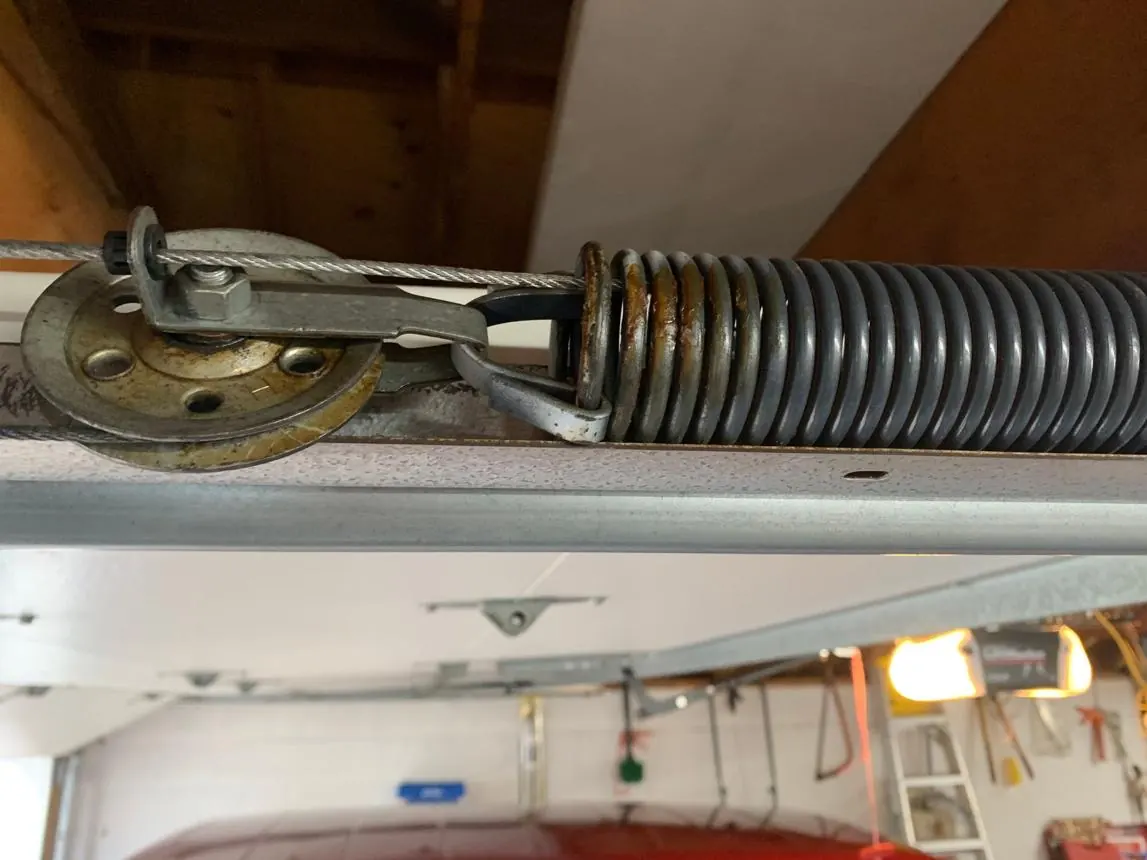
Extension springs are usually installed alongside the horizontal garage door tracks.
They stretch as the door closes and contract as it opens, helping counterbalance the door.
These systems are found on some older residential garage doors and certain door configurations.
Extension spring lifespan also depends on the manufacturer's rating and the conditions in which the system operates.
Neither spring type has one universal replacement schedule. A properly specified extension spring may outlast a poorly installed torsion spring, and vice versa.
The important question isn't simply which type lasts longer. It's whether the installed spring system is appropriate for your garage door's weight, size, and daily use.
7 Signs Your Garage Door Springs Are Wearing Out
Garage door springs can fail suddenly, sometimes without obvious warning. However, certain changes in how your garage door operates may indicate spring deterioration or another problem within the lifting system.
Here are seven signs homeowners should recognize.
Your Garage Door Feels Heavier Than Normal
Garage door springs help counterbalance most of the door's weight.
When the spring system stops providing proper support, the door may become unusually heavy or difficult to move.
This doesn't necessarily mean a spring has already broken. It could indicate a spring problem, an incorrect adjustment, or another issue affecting door balance.
If you notice a significant change in how your garage door operates, avoid forcing it open or attempting to adjust the springs yourself.
A qualified technician can assess the counterbalance system and determine whether spring replacement is necessary.
The Garage Door Opens Only Partway
You press the opener button, and the door starts rising but stops after a few inches.
This can happen when a broken or malfunctioning spring leaves the opener unable to lift the door's full weight.
However, partially opening doors can also result from opener settings, damaged tracks, or other mechanical problems.
Repeatedly pressing the remote may place additional strain on the opener without correcting the underlying issue.
If your garage door stops unexpectedly or appears unstable, discontinue operation and arrange an inspection.
You Hear a Loud Bang From the Garage
A sudden loud bang from the garage can be one of the clearest signs of a broken torsion spring.
When a spring fractures under tension, the release of stored energy can produce a sharp noise that homeowners sometimes mistake for something falling or striking the garage door.
You may not immediately notice a problem until the next time you attempt to operate the door.
If you hear an unexplained bang and suspect spring failure, visually inspect the area only from a safe distance. Do not touch the spring, shaft, cable drums, or related hardware.
A broken spring needs professional attention before the door is operated again.
The Garage Door Moves Unevenly or Appears Crooked
A garage door should travel smoothly along its tracks.
If one side rises faster than the other or the door appears tilted, there may be a problem with the counterbalance or lifting system.
On some garage doors, a failed spring or damaged lifting cable can contribute to uneven movement.
Other causes include track damage, roller problems, and hardware failures.
Because several components work together to support the door, it's important not to assume the springs are responsible without an inspection.
An uneven garage door can become unstable. Stop operating it and contact a professional garage door repair service to determine the cause.
You Notice a Visible Gap in the Spring
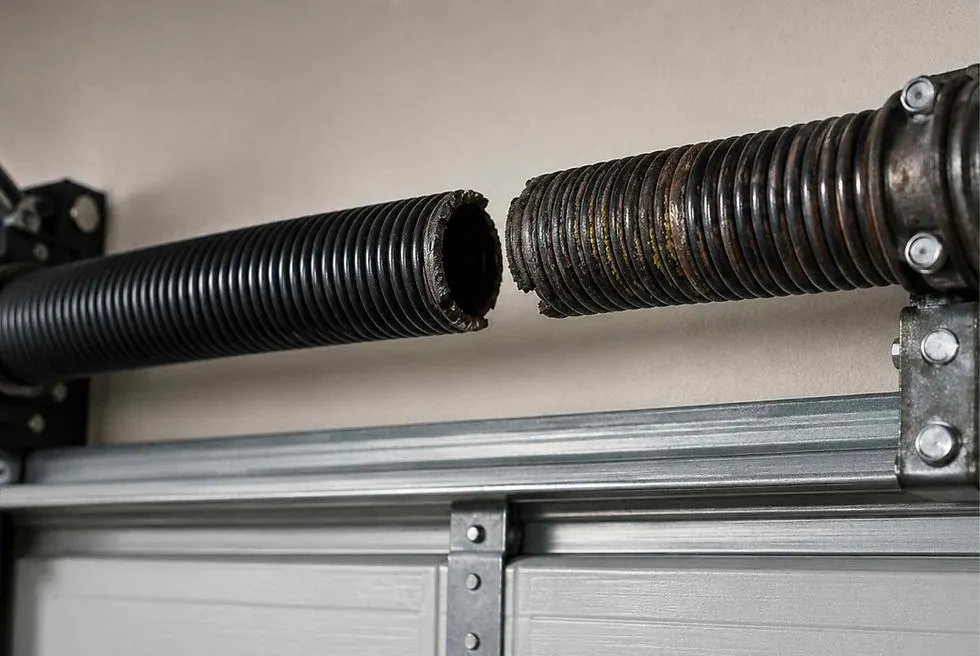
A broken torsion spring may show a noticeable separation between sections of the coil.
Instead of appearing as one continuous spring, it may have a visible gap where the metal has fractured.
This is a strong indication that the spring has broken and needs replacement.
Extension spring failures may look different depending on the system.
Not all spring damage is visible from the ground, and some systems contain enclosed springs. Never climb up to inspect or handle a spring assembly.
If you can see an obvious break from a safe location, stop using the garage door and schedule professional service.
The Garage Door Opener Sounds Like It's Struggling
Your garage door opener is designed to move a properly balanced door, not lift the entire unsupported weight by itself.
When springs stop working correctly, the opener may appear to strain, stall, or stop before the door fully opens.
Some homeowners assume the motor is failing and begin shopping for a replacement opener.
But replacing the motor won't correct a broken spring.
The spring system should be evaluated before deciding that the opener is defective.
If the springs are functioning correctly and the problem is isolated to the motorized system, professional garage door opener repair may be the more appropriate solution.
You See Significant Rust or Deterioration on the Springs
Surface corrosion doesn't automatically mean a spring is about to break, but extensive rust, pitting, or visible deterioration deserves attention.
Garage door springs repeatedly twist or stretch during operation. Corrosion can contribute to weakening and fatigue over time.
This may be particularly relevant for homes near coastal areas such as Newport Beach, Costa Mesa, Laguna Beach, and Dana Point, where salt-laden air can accelerate corrosion on exposed metal hardware.
If the springs show substantial deterioration, have a professional evaluate their condition rather than attempting to clean, tighten, or repair them yourself.
What Causes Garage Door Springs to Wear Out Faster?
Two garage doors installed at the same time may need spring replacement years apart.
The difference often comes down to how the doors are used and maintained.
Frequent Daily Use
Every complete opening-and-closing cycle contributes to spring fatigue.
A household with multiple drivers may use the garage door several times each day. If the garage also serves as the primary entrance, daily cycles can add up quickly.
For example, four complete cycles per day equal approximately 1,460 cycles annually.
At that rate, a 10,000-cycle spring reaches its nominal rating in roughly 6.8 years.
This doesn't mean it will fail on that exact date. It simply shows why usage is more useful than age alone when estimating spring life.
Incorrect Spring Sizing
Garage door springs must be matched to the door's weight and configuration.
A spring that's incorrectly sized or installed may not provide the intended counterbalance.
This can affect door movement and place unnecessary stress on the spring system and opener.
When springs are replaced, the correct specifications should be determined from the garage door system rather than assuming every residential door uses identical hardware.
Corrosion and Environmental Exposure
Southern California's climate is generally mild, but garage door hardware still experiences environmental wear.
Coastal moisture and salt exposure can contribute to corrosion, while changing temperatures and accumulated dirt can affect mechanical components.
The condition of protective coatings and the garage environment also matters.
Regular visual observation and appropriate professional maintenance can help identify corrosion before it becomes a more serious concern.
Poor Maintenance or Installation
Improper installation, incorrect adjustments, and neglected mechanical issues can reduce spring performance.
The Door and Access Systems Manufacturers Association (DASMA) identifies installation, handling, and operating conditions as factors that affect spring cycle life.
A spring installed with the wrong tension or used on an improperly balanced door may not achieve its intended service life.
Professional garage door maintenance in Orange County can help identify developing problems with balance, hardware, movement, and lubrication before they lead to additional complications.
Can You Make Garage Door Springs Last Longer?
You can't eliminate metal fatigue, but good maintenance practices can help the garage door system operate as intended.
One of the simplest habits is paying attention to changes in normal operation.
If your garage door begins making unfamiliar noises, moves unevenly, or starts hesitating, don't ignore those changes for months.
Schedule an inspection before the problem becomes more difficult to manage.
Keeping tracks clear of debris and maintaining appropriate garage conditions can also support reliable operation. Lubrication should follow the door and spring manufacturer's recommendations, using products suitable for the specific components.
Avoid applying random oils or attempting to lubricate, tighten, or adjust spring hardware without proper knowledge.
Homeowners should also avoid repeatedly operating a garage door that's visibly damaged or difficult to move.
Most importantly, arrange periodic professional inspections, particularly if the garage door is used frequently or the springs are approaching their expected cycle life.
Maintenance may help identify developing problems, but it cannot guarantee that a spring won't fail unexpectedly.
When Should You Replace Garage Door Springs?
Garage door springs generally need replacement when they have broken, are significantly damaged, or can no longer perform their counterbalancing function correctly.
Age and estimated cycle usage can help determine when an inspection is worthwhile, but they don't automatically mean the springs must be replaced.
For example, a 10-year-old spring used only occasionally may still be serviceable, while a much newer spring on a heavily used garage door could already be near the end of its expected life.
A technician should evaluate the spring system, door weight, movement, and condition of related components before recommending replacement.
Should You Replace Both Garage Door Springs at the Same Time?
Some residential garage doors use two torsion springs.
If one spring breaks, the other may have experienced a similar number of cycles, particularly if both were installed together.
Replacing both may be worth considering when they are the same age, have comparable wear, and are approaching the end of their expected service life.
However, replacing both springs isn't automatically necessary in every situation.
The correct recommendation depends on the spring configuration, condition, and manufacturer specifications.
A professional should explain whether one or both springs need replacement and why.
Are High-Cycle Garage Door Springs Worth the Upgrade?
If your garage door is used frequently, high-cycle springs may be worth discussing when replacement becomes necessary.
Standard residential springs are commonly rated around 10,000 cycles, while high-cycle versions may be designed for 20,000, 25,000, or more cycles.
The benefit is straightforward: a higher rated cycle life can potentially provide more years of service under comparable operating conditions.
For example, a 25,000-cycle spring used four times daily has a theoretical cycle-based lifespan of approximately 17 years.
Actual performance may be shorter or longer depending on installation, maintenance, environmental conditions, and the door's operating characteristics.
High-cycle springs aren't necessarily the best choice for every homeowner. They may have a higher initial cost, and the available options depend on the door's weight and spring system.
If you're planning to stay in your home for many years or use the garage frequently, ask whether an appropriately sized high-cycle spring is available for your door.
What Happens If You Keep Using a Garage Door With a Worn or Broken Spring?
A garage door with a failing spring may continue operating temporarily, but that doesn't make it safe.
The spring system is responsible for counterbalancing the door's weight. When it fails, the opener and other components may be exposed to loads they weren't designed to handle.
Continuing to operate the door could contribute to opener damage, cable problems, or unstable movement.
More importantly, a garage door that is no longer properly balanced can create a serious injury risk.
Never attempt to force open a door with a suspected broken spring. Don't disconnect the opener to lift the door manually when the spring system may be damaged.
If a spring breaks while the garage door is open or partially open, keep people and pets away from the door and contact a qualified technician.
For situations where a broken spring leaves your garage unsecured, blocks vehicle access, or creates an immediate safety concern, First Garage Door offers emergency garage door repair in Orange County, subject to appointment availability.
Garage Door Spring Lifespan in Orange County Homes
Garage door usage patterns vary across Orange County.
A homeowner in Irvine who uses the garage as the primary family entrance may complete several cycles every day. Another homeowner in Anaheim or Fullerton may use the garage mainly for storage and operate the door much less frequently.
Those differences can have a greater effect on spring lifespan than the city itself.
Environmental exposure also matters.
Homes closer to the coast may experience more corrosion-related concerns, while older garage door systems throughout the county may have components that have already accumulated years of use.
Rather than relying on a fixed replacement age, homeowners should consider the spring's installation date, estimated usage, visible condition, and changes in garage door operation.
If you live in Irvine and notice signs of spring wear, First Garage Door provides garage door services in Irvine as part of its broader Orange County service coverage.
Why Choose First Garage Door for Spring Repair in Orange County?
When your garage door begins behaving differently, identifying the cause matters more than simply replacing the first component that looks suspicious.
First Garage Door provides residential garage door spring repair and replacement throughout Orange County, including Irvine, Tustin, Anaheim, Costa Mesa, Mission Viejo, and surrounding communities.
The company services torsion and extension spring systems and evaluates the condition of the garage door and related components before recommending work.
Homeowners can request an on-site written estimate that explains the proposed repairs and associated charges.
This approach helps distinguish between a spring problem, opener malfunction, or another issue affecting garage door movement.
Whether your springs are approaching their expected lifespan or you've noticed a sudden change in door operation, the first step is understanding the condition of the system.