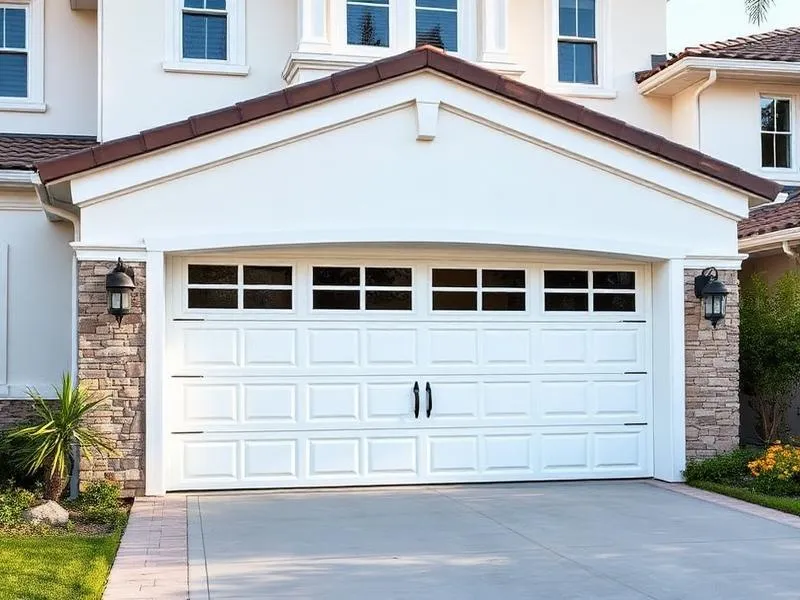
You're running late for work, press the garage door remote, and hear the opener start. The door rises a few inches, stops, and refuses to move any farther.
You try again. Nothing.
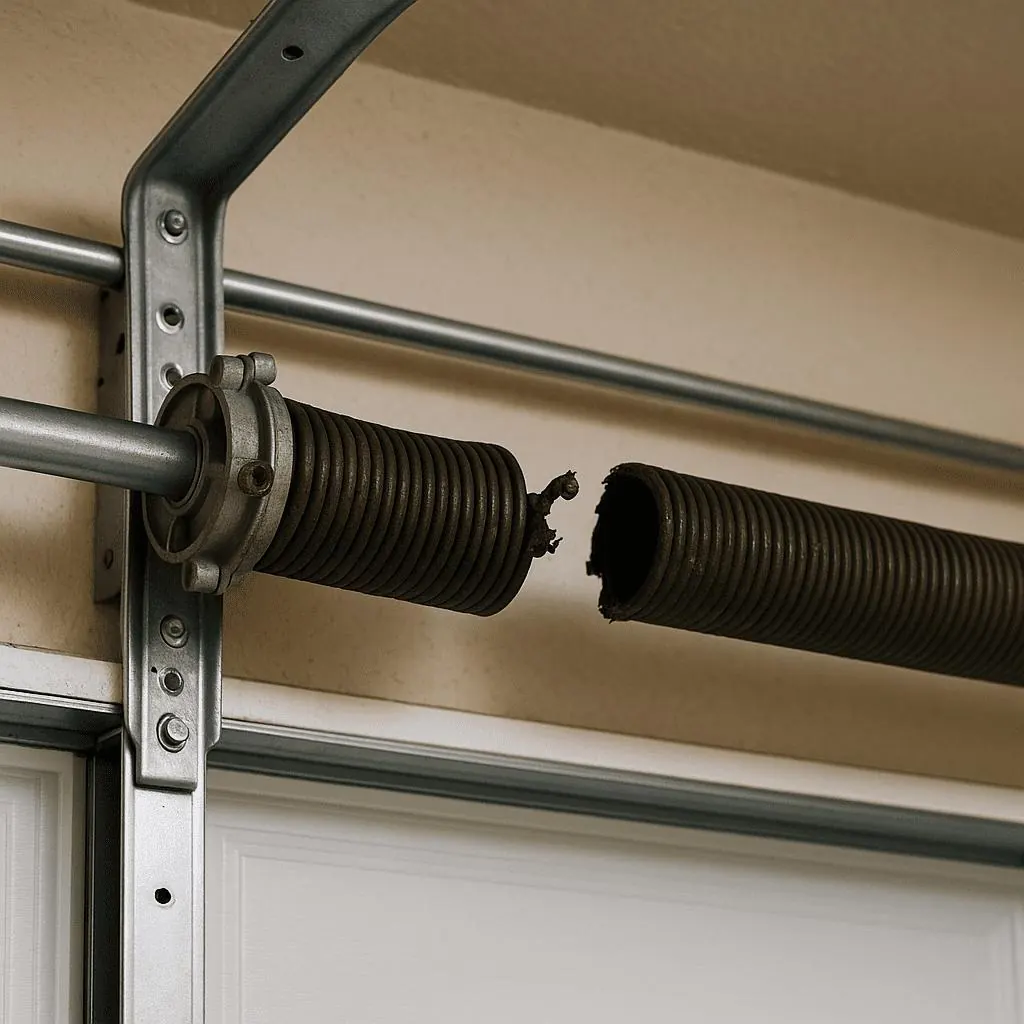
Then you notice something unusual above the garage door: a visible gap in one of the metal springs.
Now you're wondering: Can you open a garage door with a broken spring?
The short answer is that a garage door may still be physically movable with a broken spring, but you should not attempt to open it yourself. A broken spring can leave the door extremely heavy and unstable. Trying to force it open, operate the motor, or lift it manually can result in injuries or additional damage.
For Orange County homeowners who depend on their garage for daily access, a broken spring can quickly become frustrating. But understanding what has happened and how to respond safely is more important than getting the door open immediately.
Here's what you need to know before taking your next step.
Why Won't Your Garage Door Open With a Broken Spring?
Garage door springs do much more than help the door move smoothly.
A typical residential garage door can weigh well over 100 pounds, with larger insulated or custom doors weighing considerably more. The springs counterbalance much of that weight so the opener can move the door without carrying the entire load.
When a spring breaks, that balance changes.
The opener may no longer have enough lifting capacity to raise the door. You might hear the motor running while the door remains closed, or the door may lift slightly before stopping.
Some systems have two springs. If one breaks, the remaining spring may still provide partial support, but the door is no longer operating as designed.
Continuing to use the system can place excessive strain on the opener, cables, and other hardware.
If your garage door suddenly stops opening or feels unusually heavy, professional garage door spring repair in Orange County can help determine whether a broken spring is responsible.
What Happens When a Garage Door Spring Breaks?
Garage door springs store mechanical energy under significant tension. Over time, repeated opening and closing causes metal fatigue, eventually leading to failure.
There are two common residential spring systems.
Broken Torsion Spring
Torsion springs are generally mounted above the garage door opening on a metal shaft.
When one breaks, you may hear a loud bang or notice a visible separation between the coils.
The door can become extremely difficult to lift because the spring is no longer providing its intended counterbalancing force.
A broken torsion spring can also affect the operation of a two-spring system, even when the other spring remains intact.
Broken Extension Spring
Extension springs are typically positioned along the horizontal garage door tracks.
They stretch and contract as the door operates.
When an extension spring breaks, the door may move unevenly or become difficult to operate. Broken spring components can also create a projectile hazard, particularly if the system lacks an appropriate safety containment cable.
Neither type of spring should be repaired, adjusted, or replaced by an untrained homeowner.
Can You Manually Lift a Garage Door With a Broken Spring?
Some homeowners consider disconnecting the automatic opener and lifting the garage door by hand.
Although this may seem like a practical solution, it can be dangerous.
The emergency release mechanism disconnects the opener from the door. It does not repair the spring or restore the counterbalance system.
Without working springs, the door may be much heavier than expected. It could also move suddenly, become difficult to control, or fall.
The risk is especially serious if the door is already partially open.
Do not pull the emergency release cord on an open or partially open garage door when a spring may be broken. Disconnecting the opener can remove a source of restraint and allow an improperly supported door to fall.
Even if the garage door is fully closed, manually lifting it with a broken spring is not recommended.
If your vehicle is trapped inside, contact a qualified garage door technician rather than attempting to lift the door with help from family members or neighbors.
What Should You Do Immediately After a Garage Door Spring Breaks?
A broken garage door spring doesn't always create an emergency requiring immediate action, but it does require careful handling.
The safest response is to stop operating the system and arrange professional assistance.
Stop Using the Garage Door
Don't repeatedly press the remote or wall-mounted opener button.
If the door is no longer properly balanced, continued operation can place additional stress on the opener and lifting components.
Leave the door in its current position and avoid trying to force it open or closed.
Keep People and Pets Away
A garage door with a damaged spring may be unstable.
Keep children, pets, and other household members away from the door and its operating hardware.
If the door is hanging unevenly or stuck partially open, avoid walking or standing underneath it.
Don't Touch the Spring or Cables
Garage door springs, lifting cables, and cable drums are part of a system that can contain substantial stored energy.
Do not attempt to loosen bolts, unwind springs, reposition cables, or remove broken components.
These repairs require specialized tools and professional training.
Contact a Garage Door Repair Professional
Explain what happened and describe any symptoms you've noticed.
For example, tell the technician whether you heard a loud bang, saw a gap in the spring, or noticed that the opener runs without lifting the door.
If the door is unstable, stuck open, or blocking essential access, ask about emergency garage door repair.
First Garage Door provides emergency and same-day service throughout its Orange County coverage area, subject to appointment availability.
How Can You Tell Whether the Spring Is Actually Broken?
A garage door that won't open doesn't automatically mean the spring has failed.
Several mechanical and electrical problems can produce similar symptoms.
A broken spring is more likely when you notice a loud snapping sound, visible separation in a torsion spring, sudden difficulty lifting the door, or a garage door that rises only a short distance before stopping.
However, opener malfunctions, damaged cables, track problems, and other mechanical failures can also prevent a garage door from opening.
For example, if the opener motor runs but the door doesn't move, the problem could involve a disconnected drive mechanism rather than the springs.
If the door moves unevenly, the issue may involve a lifting cable or track component.
You can observe visible symptoms from a safe distance, but avoid touching or testing damaged hardware.
When the cause isn't clear, a professional garage door repair inspection can identify the actual problem before parts are replaced unnecessarily.
Can a Garage Door Opener Work With a Broken Spring?
A garage door opener may still receive power and respond to commands after a spring breaks.
You might hear the motor activate or see the opener lights turn on.
However, that doesn't mean the system can safely open the door.
Garage door openers are designed to operate doors that are properly balanced by their spring systems. They aren't intended to compensate for a broken counterbalance spring.
Trying to force the opener to lift an unsupported door may cause the motor to strain, activate its safety mechanisms, or damage components.
Some homeowners assume the opener itself has failed because the garage door won't move.
Before replacing the motor, the spring system should be inspected.
If the springs are functioning properly and the issue is isolated to the automatic operator, garage door opener repair may be the appropriate service.
What If Your Garage Door Is Stuck Open?
A garage door stuck open with a broken spring creates additional concerns.
Besides preventing normal use, it may leave your garage and connected living areas less secure.
The temptation is to pull the emergency release and manually lower the door.
But an open garage door with a damaged spring can be particularly dangerous because the door may fall unexpectedly when its restraint changes.
Do not attempt to lower it yourself.
Keep the area beneath the door clear and prevent anyone from walking through the opening.
If your garage provides access to your home, secure the interior connecting door while waiting for service.
Contact a qualified technician and explain that the garage door is stuck open and may have a broken spring. This information helps the service provider understand the urgency and potential hazards.
Can You Drive Out of the Garage With a Broken Spring?
If your vehicle is trapped behind a closed garage door, it's understandable to look for a quick solution.
Unfortunately, a broken spring can make opening the door unsafe without professional equipment and assistance.
Don't attempt to lift the door with several people, use a vehicle to pull it open, or force the opener to keep running.
These approaches can damage the garage door and create serious injury risks.
If you need transportation urgently, consider using another vehicle, arranging a ride, or rescheduling the trip while waiting for professional service.
A garage door technician can assess the system and determine how to safely restore access.
For homeowners in Irvine, Tustin, Anaheim, and nearby communities, contacting a local repair company as soon as the problem is discovered may help reduce disruption.
Does a Broken Spring Mean You Need a New Garage Door?
Not necessarily.
A broken spring is often a repairable component failure rather than a reason to replace the entire garage door.
If the door panels, tracks, hinges, and other structural components remain in good condition, replacing the damaged spring may restore proper operation.
However, additional problems sometimes become apparent during inspection.
For example, an older garage door may have worn cables, damaged rollers, or other hardware that needs attention.
A technician should distinguish between components that require repair and those that remain serviceable.
Complete door replacement generally becomes a separate consideration when the existing door has substantial structural damage, repeated failures, or other problems that make continued repairs impractical.
For most isolated spring failures, the first step is evaluating the spring system rather than assuming the entire door needs replacing.
How Do Professionals Repair a Broken Garage Door Spring?
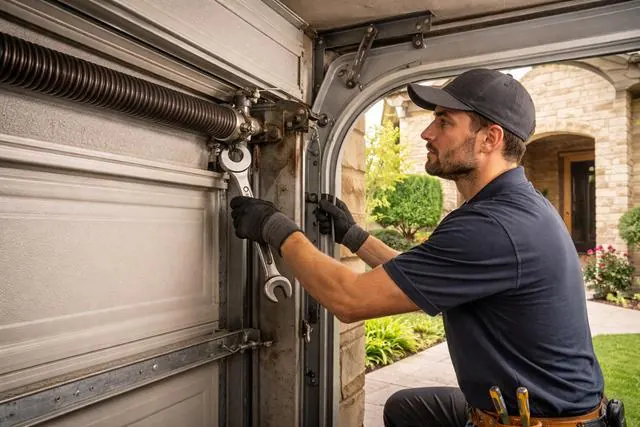
Professional spring repair begins with identifying the spring configuration and assessing the condition of the door.
The technician determines which spring has failed and checks whether other components have been affected.
Replacement springs must be properly matched to the door's weight and operating requirements.
Using an incorrectly sized spring can leave the door improperly balanced, increase strain on the opener, and affect the system's reliability.
After replacing the necessary components, the technician should check door balance, movement, and operation.
The goal isn't simply to make the garage door open again. It's to restore proper counterbalance and confirm that the system operates as intended.
Should Both Springs Be Replaced?
Some garage doors use two torsion springs.
When one breaks, the other may have accumulated a similar number of operating cycles, especially if both were installed at the same time.
In that situation, replacing both springs may be a reasonable recommendation.
However, replacing both isn't automatically necessary for every garage door.
The decision depends on spring age, condition, system configuration, and the manufacturer's requirements.
Ask the technician to explain whether one or both springs need replacement and what supports that recommendation.
How Much Does It Cost to Fix a Broken Garage Door Spring?
Garage door spring replacement costs depend on the spring type, door size, number of springs, required labor, and whether additional components need attention.
A standard residential spring replacement may cost a few hundred dollars, while larger doors, specialty spring systems, or additional repairs can increase the total.
A quote should clearly explain the replacement parts and work required.
If the technician recommends replacing cables, rollers, or other components, ask whether those items are damaged or being suggested as preventive maintenance.
For Orange County homeowners, an on-site inspection is the most reliable way to determine the actual repair cost.
First Garage Door advertises on-site written estimates, with individual repair items explained before work begins.
How Can You Reduce the Risk of Another Broken Spring?
No garage door spring lasts forever.
Every opening-and-closing cycle contributes to metal fatigue, and even a properly installed spring will eventually reach the end of its useful life.
However, appropriate maintenance can help identify developing issues before they lead to more serious problems.
Pay attention to changes in garage door movement, unusual noises, and visible corrosion.
Don't ignore a door that begins moving unevenly or requires repeated attempts to open.
If your household uses the garage as its main entrance, the springs may accumulate cycles faster than those on a rarely used door.
Routine garage door maintenance can help identify balance issues, deteriorating hardware, and other conditions that deserve attention.
A technician can also discuss whether higher-cycle replacement springs are appropriate when spring replacement becomes necessary.
Broken Garage Door Spring Repair in Orange County
A broken garage door spring can disrupt daily routines anywhere, but the circumstances often vary between households.
In Irvine and Mission Viejo, families may depend on their garage doors for multiple daily trips. A spring failure can prevent access to vehicles or leave a door unusable at an inconvenient time.
In older homes around Anaheim, Fullerton, and Orange, the spring system may have accumulated years of regular use.
Homes closer to coastal communities such as Newport Beach and Costa Mesa may also experience corrosion-related wear on exposed metal components.
Regardless of where you live, the safest response remains the same: avoid operating a door with a suspected broken spring and arrange professional assessment.
First Garage Door serves residential customers throughout Orange County, including homeowners seeking garage door services in Irvine.
Why Choose First Garage Door for Broken Spring Repair?
When a garage door spring breaks, you need to understand the problem, the available repair options, and the work required to restore safe operation.
First Garage Door provides residential spring repair and replacement services throughout Orange County.
The company handles torsion and extension spring systems and can assess related garage door components when a spring failure affects normal operation.
Its published service process includes an on-site assessment, an itemized written estimate, and testing the garage door after approved repairs.
Homeowners can review the proposed work before making a decision.
Emergency and same-day service may also be available when a broken spring leaves the door stuck, unstable, or blocking access.