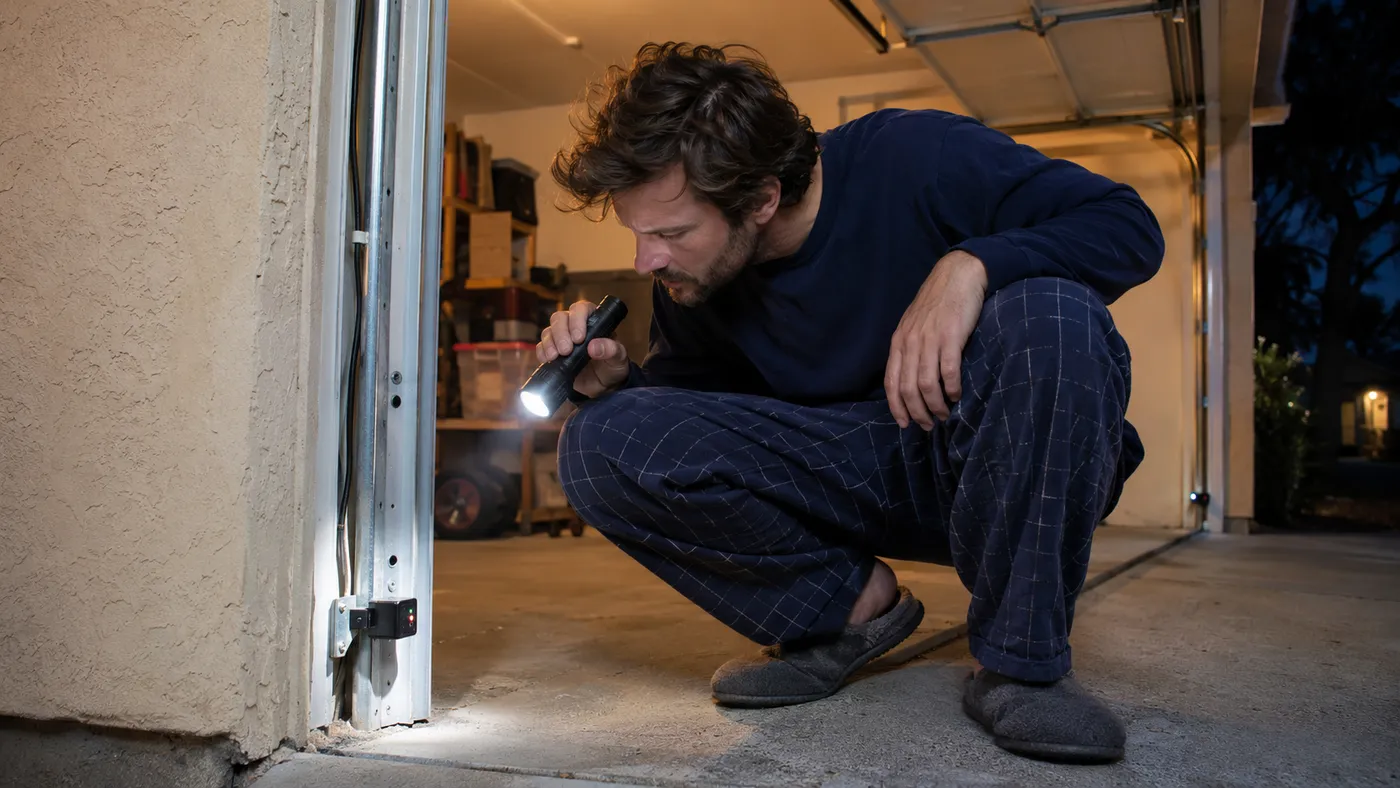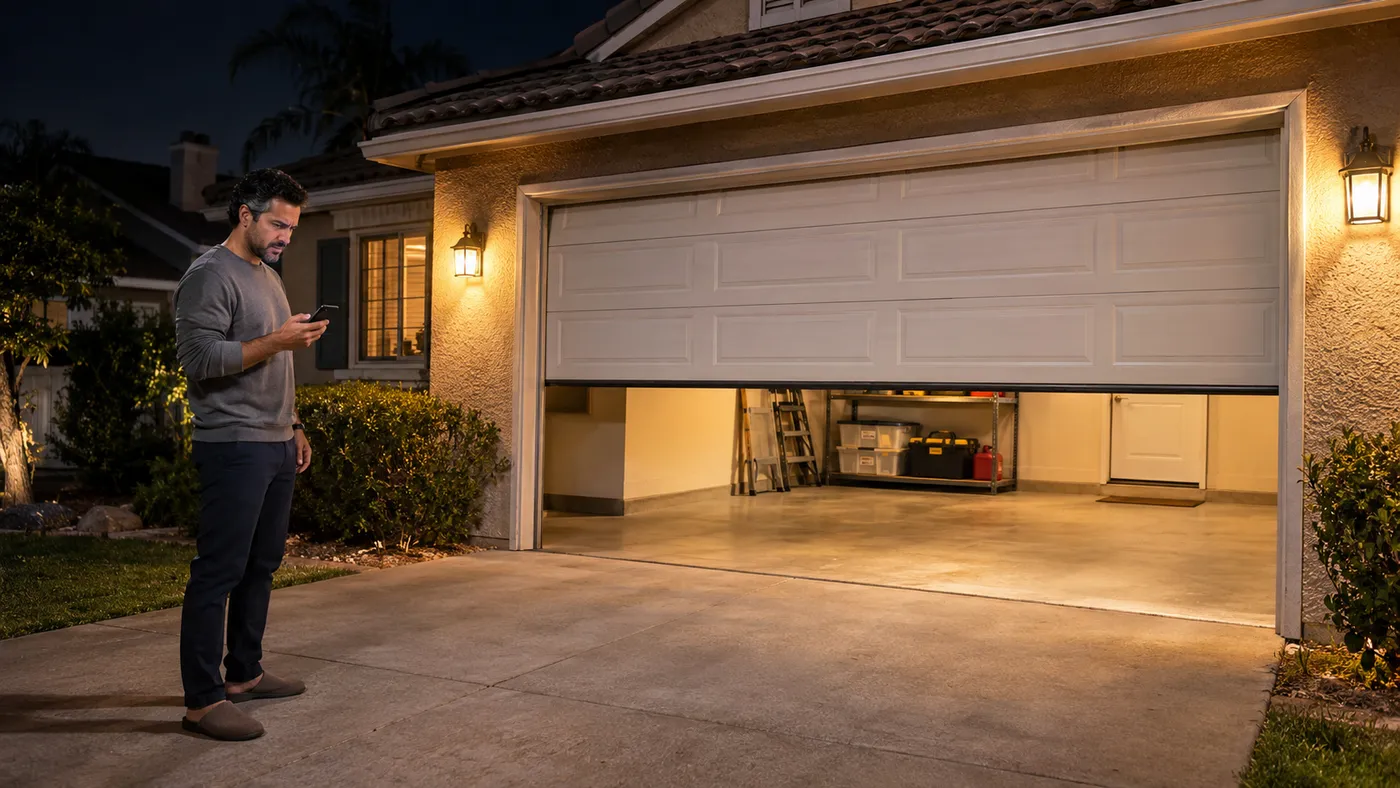
Finding your garage door open when nobody remembers opening it can be unsettling. You may notice it in the morning, hear the opener running late at night, or discover that the door has opened while everyone is away.
This unexpected behavior is often called garage door ghost opening or phantom opening. Although it can seem mysterious, there is usually a technical explanation involving the remote, wall control, wiring, opener electronics, or connected smart-home devices.
Why does my garage door open by itself? A garage door may open unexpectedly because of a stuck remote button, faulty wall control, damaged wiring, an unintended access command, or a malfunctioning opener logic board. Sometimes, the door is not opening spontaneously at all, it is reversing before completing its closing cycle.
Understanding the difference helps you identify the problem without replacing working components unnecessarily.
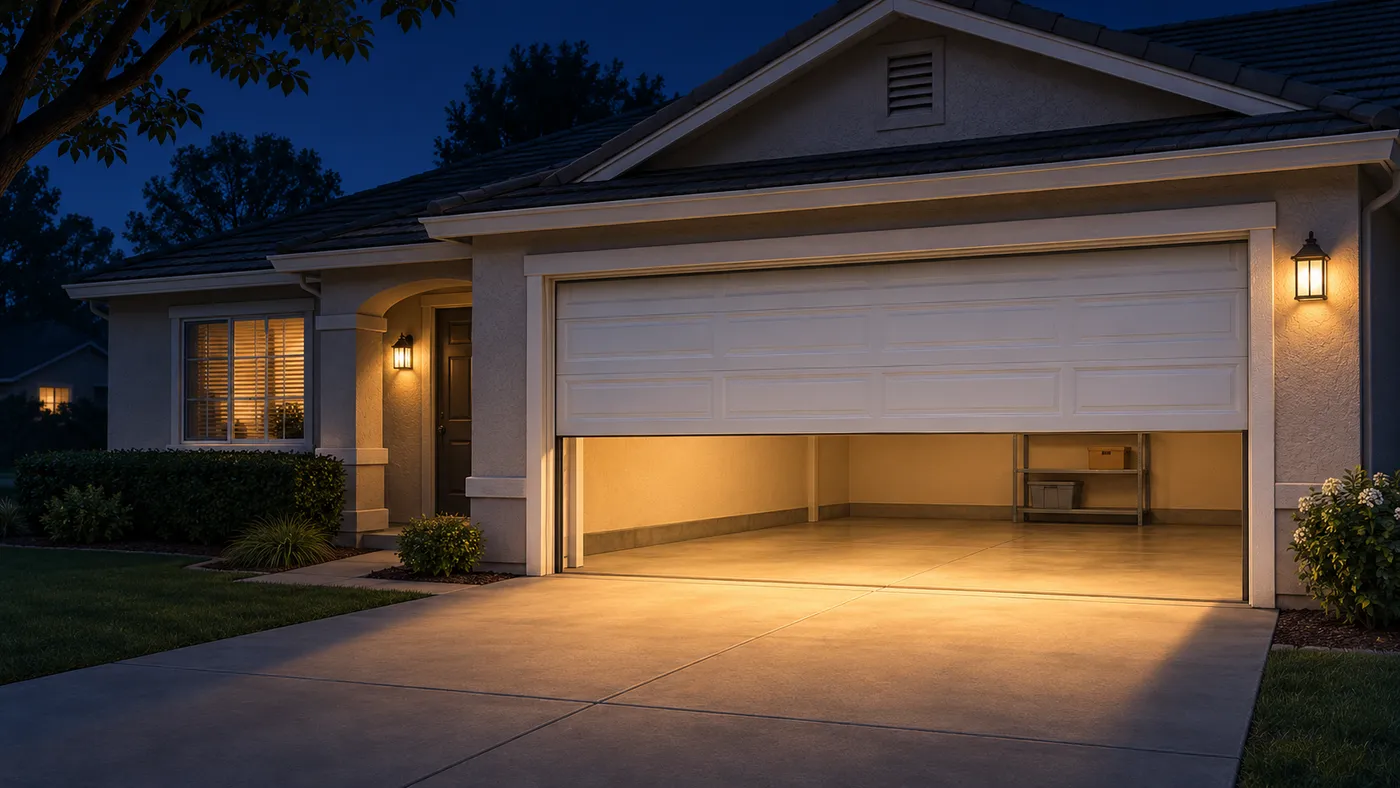
Is Your Garage Door Opening by Itself or Reversing While Closing?
Before troubleshooting, pay attention to when the problem occurs.
A garage door that begins opening from a completely closed position may be receiving an unintended command. A door that starts closing and then travels upward is usually experiencing a closing or safety-system problem.
| Garage Door Behavior | Possible Explanation |
|---|---|
| Opens from a fully closed position | Remote, wall control, wiring, access command, or opener electronics |
| Opens unexpectedly at night | Accidental activation, smart-home command, or electrical fault |
| Starts closing but reverses | Obstruction, safety sensors, or travel settings |
| Opens when another device is used | Control programming or an unintended activation |
| Operates unexpectedly after a power event | Electronic fault or connected automation |
This distinction matters because the correct repair depends on what the door is actually doing.
8 Reasons Your Garage Door Opens by Itself
An automatic garage door opener receives commands from several devices. If one control malfunctions or an unintended command reaches the opener, the door may operate without anyone deliberately pressing the button.
Here are eight possible explanations.
Stuck or Malfunctioning Garage Door Remote
A garage door remote can send an unintended command when its button becomes stuck or damaged.
Remotes are frequently carried in pockets, bags, and vehicles. Pressure from another object may activate a button without the owner's knowledge. Moisture, physical damage, or worn components can also affect how the transmitter works.
What to check:
- Look for buttons that remain pressed or feel unusually stiff.
- Inspect the remote for cracks or moisture damage.
- Check whether something inside your vehicle is pressing the remote.
- Consider whether the problem started after the remote was dropped.
If you have several remotes, inspect each one rather than assuming the most frequently used remote is responsible.
A damaged remote may need replacement or reprogramming. Avoid opening the garage door opener's electrical housing to investigate a remote problem.
Faulty Wall Button or Control Panel
The wall-mounted control panel communicates with the garage door opener. A defective button or damaged connection may cause the opener to receive an unintended activation signal.
Aging components, moisture, and physical damage can contribute to these problems.
Warning signs include:
- A wall button that sticks or responds inconsistently.
- Visible damage to the control panel.
- Problems that began after moisture exposure.
- Unexpected operation even when handheld remotes are not being used.
A technician can inspect the wall control and determine whether the panel or its connection needs repair.
If the issue involves the opener's electronic controls, professional diagnosis is more reliable than replacing parts without testing them.
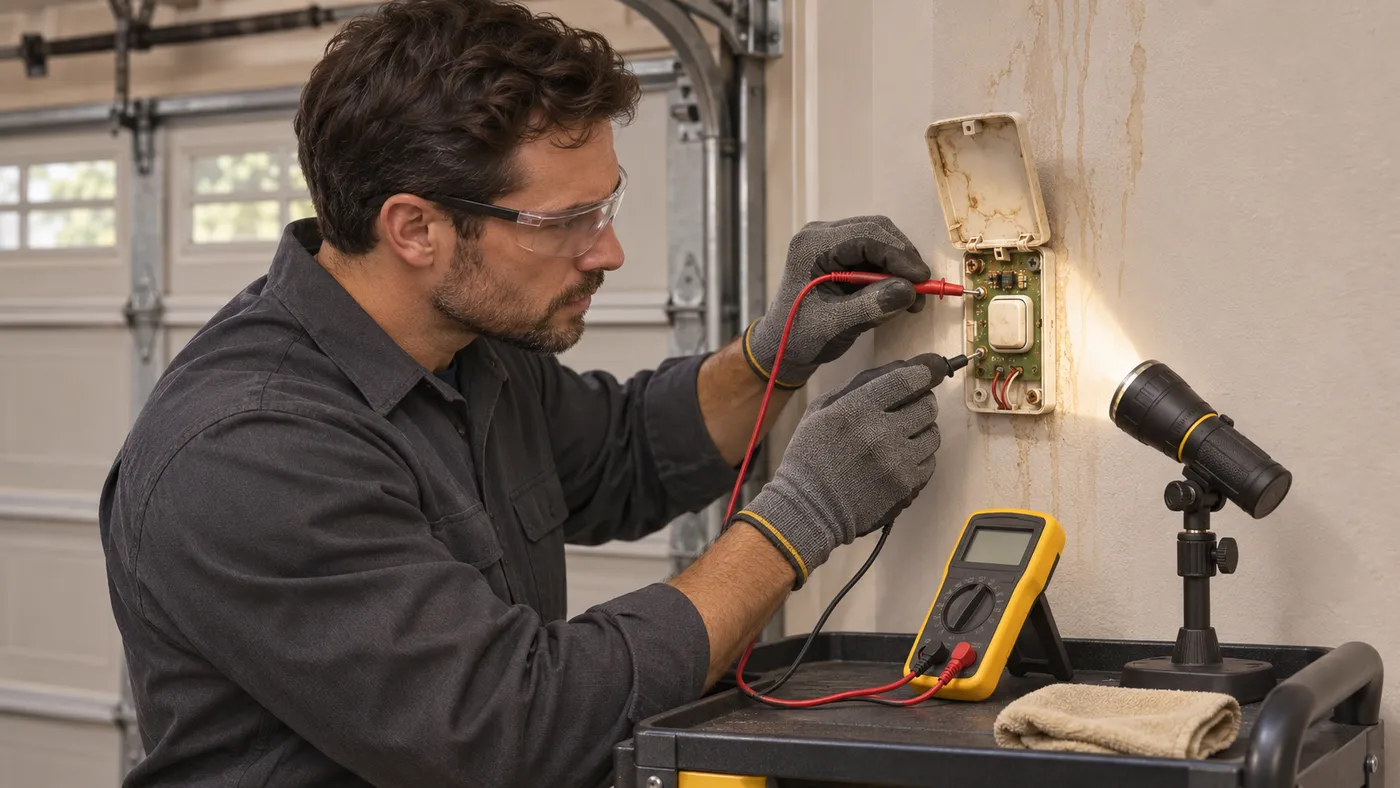
Damaged or Shorted Low-Voltage Wiring
Garage door wall controls commonly communicate with the opener through low-voltage wiring.
If the wiring becomes damaged or its conductors make unintended contact, some opener systems may interpret the fault as an activation command.
Potential causes include damaged insulation, loose terminals, moisture, and deterioration over time.
Signs that warrant inspection:
- Visible damage to accessible wiring.
- Moisture near the wall control.
- Intermittent control-panel operation.
- Unexpected activation that continues after remote problems have been ruled out.
Do not touch exposed conductors or remove electrical covers to test the system.
A qualified technician can inspect the control wiring and determine whether a short circuit or damaged connection is causing the problem.
Older Opener Codes or Unintended Wireless Activation
Garage door remotes communicate with their receivers using radio signals. However, ordinary radio interference and unintended activation are not the same problem.
Radio interference typically disrupts communication, making a remote work inconsistently or preventing the opener from responding.
Unintended activation may occur when a compatible command is received from an authorized device or, in certain older systems, when fixed-code technology creates overlapping access possibilities.
Modern rolling-code systems provide stronger protection by changing the transmitted access code during normal operation.
If your opener uses older technology, a technician can check its model, programming, and security features.
Do not assume a neighbor's remote is responsible simply because the door opens unexpectedly. Check your own remotes, keypads, and connected devices first.
Homeowners with outdated equipment can also review available garage door opener systems when considering an upgrade.
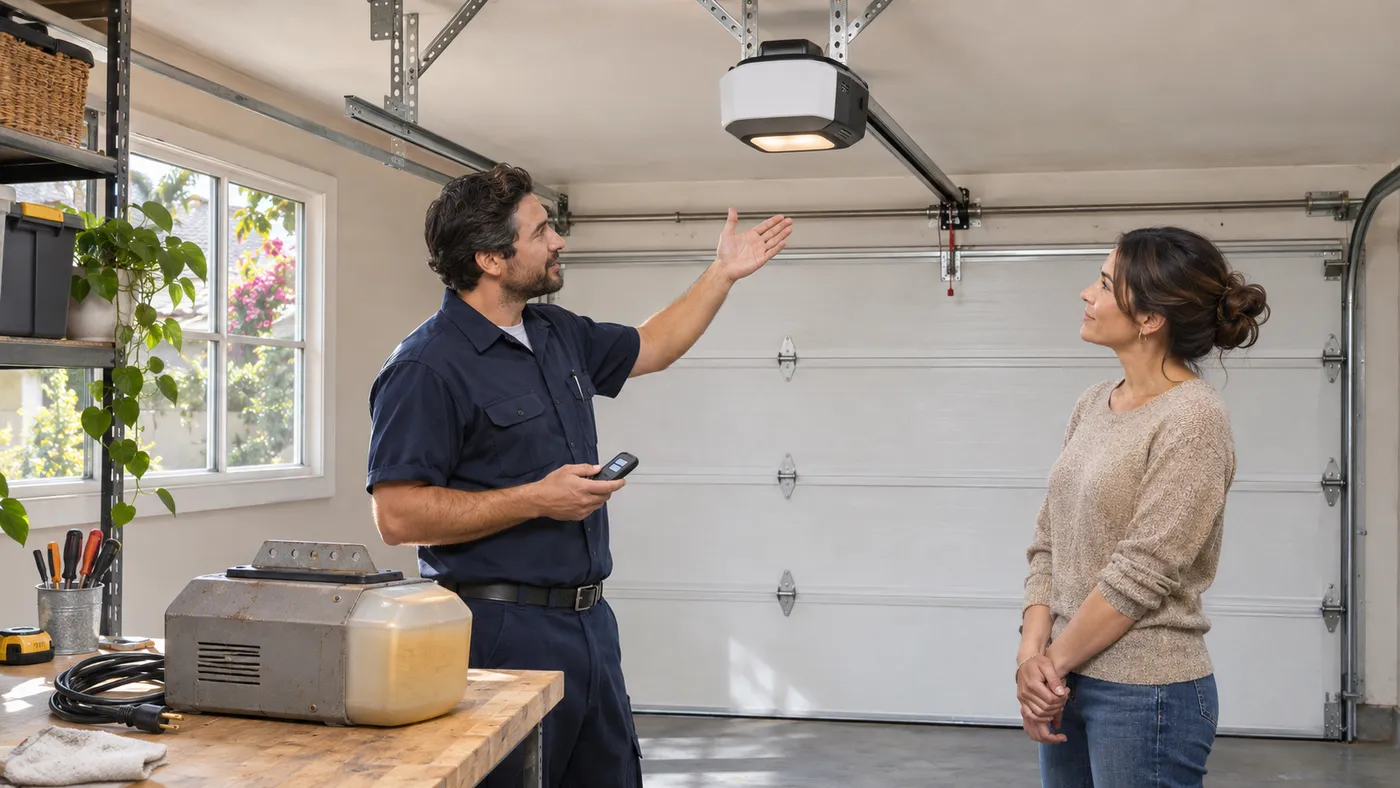
Faulty Garage Door Opener Logic Board
The logic board processes commands from remotes, keypads, wall controls, and compatible connected devices.
When this electronic component malfunctions, the opener may respond unpredictably.
Possible contributing factors include:
- Electrical surges.
- Aging electronic components.
- Moisture exposure.
- Internal circuit damage.
- General equipment deterioration.
A faulty logic board is a possible cause, but unexpected operation alone does not prove the board has failed.
Other controls and wiring should be evaluated before an expensive electronic component is replaced.
Professional garage door opener repair can help determine whether the problem involves the logic board, a connected control, or another component.
Smart Garage Door App or Automation Commands
Some garage door openers connect to smartphone applications and smart-home systems.
These features allow remote monitoring and operation, but they also introduce additional sources of commands.
For example, a scheduled routine, an authorized household member, or an incorrectly configured integration may activate the opener unexpectedly.
If your garage door opens by itself at night, review the activity recorded by your connected system.
Check the following:
- Recent opening and closing events.
- Scheduled automations.
- Connected smart-home platforms.
- Shared household access.
- Unfamiliar devices or commands.
Not every garage door app supports the same activity logs or automation features.
Use your manufacturer's instructions to review connected access and disable unnecessary routines. If you discover unfamiliar activity, secure your account and update access permissions.
Keypad or Vehicle Remote Problems
Wireless keypads and vehicle-integrated garage door controls are additional possible sources of unexpected commands.
A keypad exposed to weather may develop button problems. A vehicle transmitter may be activated accidentally, and an older remote could remain paired with the opener after it is no longer needed.
For example, a previous household member's remote may still be authorized to operate the system.
What to review:
- Exterior keypad condition.
- Vehicle-integrated controls.
- Previously programmed remotes.
- Access devices that are no longer in use.
Follow the manufacturer's instructions for removing unused devices and managing access codes.
If you cannot determine which devices are authorized, a technician can help review the opener's programming.
Mistaking a Closing Reversal for Ghost Opening
Not every garage door that moves upward unexpectedly has received an opening command.
Sometimes, the door begins closing but reverses because the safety system detects a problem.
Common explanations include:
- An object blocking the doorway.
- Misaligned or obstructed photoelectric sensors.
- A problem with the door's travel settings.
- Mechanical resistance affecting closing.
How to recognize a closing reversal:
- The door begins moving downward.
- It stops before completing its closing cycle.
- It then travels upward again.
- The opener may display a warning light or error indication.
This behavior differs from a door opening from a completely closed position.
Never bypass the safety sensors or increase opener force settings to make a malfunctioning door close.
If the problem persists, professional garage door sensor repair can help identify whether the sensors or another part of the closing system needs attention.
How to Stop a Garage Door From Opening by Itself
The safest troubleshooting approach starts with external controls and observable symptoms.
You do not need to open the motor housing or handle electrical wiring to perform these initial checks.
Check Your Remotes and Wall Controls
Inspect handheld remotes, vehicle controls, exterior keypads, and the wall-mounted button.
Look for stuck buttons, visible damage, and signs of moisture.
Consider whether the unexpected operation began after adding a new remote or changing the opener's programming.
If you suspect a particular remote, follow the manufacturer's instructions for safely removing it from service or managing its authorization.
Review Smart-Home Activity
If the opener supports an app, examine its available activity history.
Check for scheduled routines and commands from connected devices.
Remove unnecessary automation settings and review shared access permissions.
If an unfamiliar person or device appears to have access, update the account security settings and follow the manufacturer's instructions for revoking access.
Look for Visible Damage
Without opening any electrical enclosure, inspect accessible components for obvious problems.
Pay attention to damaged wall controls, visible wiring deterioration, or moisture near the opener.
Do not touch exposed wiring or attempt internal electrical repairs.
Review Authorized Access Devices
Think about whether an old remote, keypad, or vehicle transmitter might still operate the garage door.
Use the opener manufacturer's instructions to review programming and remove access that is no longer needed.
Be aware that clearing programmed devices may require authorized remotes and keypads to be paired again.
Arrange Professional Diagnostics if the Problem Continues
If the door keeps opening unexpectedly after these checks, the problem may involve wiring, internal electronics, or a control fault that requires testing.
A technician can inspect the relevant components and identify the source before recommending replacement.
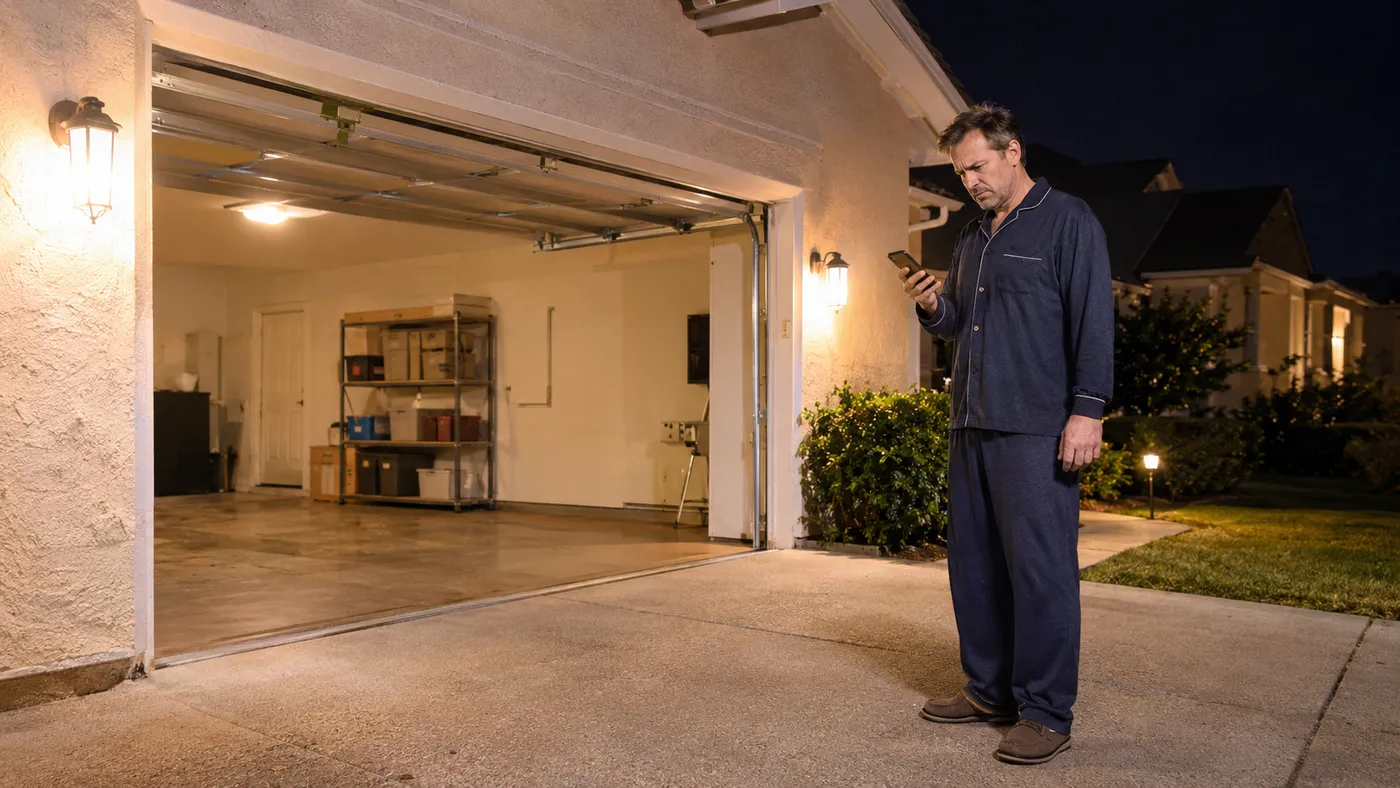
Why Does My Garage Door Open by Itself at Night?
Unexpected nighttime opening is particularly concerning because the garage may remain unsecured for hours.
However, the time of day does not establish the cause.
A remote stored in a vehicle could be activated accidentally. A smart-home routine might run at a scheduled time. An electronic fault could also occur intermittently.
Start by checking any available activity history and considering whether the opening happens at a consistent time.
If the opener has no activity log, note when the problem occurs and whether any other devices are operating nearby.
Repeated nighttime opening deserves prompt attention, especially when the garage connects directly to your home.
How to Keep Your Garage Secure Until the Problem Is Fixed
A garage door that opens unexpectedly can expose vehicles, tools, stored belongings, and access points to your home.
Until the problem is repaired, take reasonable precautions.
- Lock the connecting door between the garage and your home.
- Keep valuable belongings out of sight.
- Review unnecessary remote and app access.
- Monitor the door through an approved security system if available.
- Avoid leaving the garage unsecured for extended periods.
- Arrange professional assistance if the door cannot remain closed reliably.
Some openers have a manufacturer-approved lock or vacation mode that disables certain remote commands. Use these features only according to the manufacturer's instructions.
Disconnecting electrical power can stop powered operation, but it does not automatically prevent someone from opening the garage door manually.
Important: Never engage a manual slide lock while the automatic opener could activate. Doing so can damage the door or opener.
If the door cannot be secured safely, contact a qualified garage door technician promptly.
When Should You Call a Garage Door Repair Technician?
Some problems can be identified through simple visual checks. Others require testing the opener, control wiring, and connected devices.
Arrange professional assistance when:
- The garage door repeatedly opens without a command.
- A wall control behaves unpredictably.
- You suspect damaged electrical wiring.
- The opener operates inconsistently after a power event.
- The door cannot remain securely closed.
- Basic remote and smart-home checks do not identify the cause.
For homeowners in Orange County and Los Angeles, professional garage door repair can help diagnose unexpected operation and determine the appropriate repair.
A qualified technician should identify the actual fault before recommending expensive component replacement.
Should You Repair or Replace an Opener That Opens Randomly?
An opener that operates unexpectedly does not always need complete replacement.
The right decision depends on the faulty component, the condition of the system, and whether suitable replacement parts are available.
| Situation | Recommended Approach |
|---|---|
| Damaged remote | Replace or reprogram the remote |
| Faulty wall control | Inspect or replace the control |
| Damaged wiring | Arrange professional wiring repair |
| Isolated electronic fault | Diagnose and evaluate component repair |
| Repeated logic board problems | Compare repair and replacement |
| Outdated opener with unavailable parts | Consider opener replacement |
Replacing an entire opener because of one damaged remote is usually unnecessary.
However, an aging opener with recurring electronic problems may be a better candidate for replacement.
Homeowners can review garage door repair costs to understand common pricing considerations before requesting a professional estimate.