Imagine returning home during a neighborhood power outage. The streetlights are off, your house has no electricity, and when you press your garage door remote, nothing happens.
For homeowners who rely on their garage as the main entrance, losing access during a power outage can be more than an inconvenience. In certain emergencies, it can also create a serious safety concern.
That's one reason California introduced a law requiring battery backup technology in newly sold and installed residential garage door openers.
Under California Senate Bill 969 (SB 969), residential garage door openers sold or installed in the state on or after July 1, 2019, must include a battery backup function designed to keep the opener operating during a power outage.
But what does this mean if your garage door opener was installed years ago? Do you need to replace it? And what happens if you're installing a new garage door?
Here's what Orange County homeowners should understand about California's garage door opener battery backup requirements, how the technology works, and when upgrading may be necessary.
What Is a Garage Door Opener Battery Backup?
A garage door opener battery backup is a built-in or manufacturer-approved power system that allows a compatible automatic garage door opener to operate when household electricity is unavailable.
Under normal conditions, the opener receives electricity from your home's electrical system.
When a power outage occurs, the backup system supplies stored electrical energy so the opener can continue operating for a limited period.
The amount of operation available depends on the opener model, battery condition, door weight, temperature, and other factors.
Battery backup doesn't mean the opener can run indefinitely without electricity. It provides temporary operation while the main power supply is unavailable.
For Orange County homeowners, this can be particularly useful during utility outages, severe weather, or emergencies when access to the garage becomes important.
What Is California Senate Bill 969?
California Senate Bill 969 was signed into law in 2018 following concerns about residents being unable to open electrically operated garage doors during emergencies and power outages.
The legislation added Section 19892 to the California Health and Safety Code.
Beginning July 1, 2019, the law established battery backup requirements for residential automatic garage door openers manufactured for sale, sold, offered for sale, or installed in California.
The law also addresses situations where homeowners replace an existing residential garage door while keeping an older opener.
The goal is to ensure that newly installed residential garage door systems can continue operating automatically when normal electrical power is interrupted.
What Does the California Garage Door Opener Law Require?
Under California Health and Safety Code § 19892, the principal requirements are:
- Residential automatic garage door openers sold or installed in California on or after July 1, 2019, must have a battery backup function designed to operate during an electrical outage.
- The requirement applies to residential openers, including certain commercial-type operators used in residential applications.
- A replacement residential garage door cannot be installed and connected to an existing automatic opener that does not meet the battery backup requirement.
These rules apply throughout California, including Irvine, Anaheim, Santa Ana, Newport Beach, Mission Viejo, and other Orange County communities.
Homeowners can review the legislation directly through California Health and Safety Code § 19892.
Do All Garage Door Openers in California Need Battery Backup?
This is one of the most common points of confusion.
California law does not automatically require every homeowner to replace an older, functioning garage door opener simply because it lacks battery backup.
If your opener was installed before the requirements took effect and continues operating, the statute does not impose a general deadline requiring replacement solely because the unit lacks this feature.
However, the situation changes when you install a new opener or replace the garage door itself.
For example, if your existing opener stops working and you decide to replace it, the new residential opener must comply with California's battery backup requirements.
Likewise, if you're replacing your garage door and plan to connect it to an existing opener, that opener must meet the applicable battery backup requirement.
This distinction matters for homeowners planning renovations or deciding whether to repair an older opener.
If your current system is malfunctioning, professional garage door opener repair can help determine whether the existing unit is repairable or whether replacement is the more practical option.
What Happens If You Replace Your Garage Door but Keep the Old Opener?
Suppose your garage door panels are damaged, but the automatic opener still works.
You might assume you can replace the door and continue using the existing motor.
In California, that isn't always permitted.
Under SB 969, a replacement residential garage door cannot be installed in a manner that connects it to an existing automatic opener without the required battery backup function.
This requirement applies even when the existing opener was manufactured before July 1, 2019.
For example, a homeowner in Irvine may have a garage door opener installed in 2015. If the homeowner replaces the garage door in 2026, the existing opener must satisfy the battery backup requirement before it can be connected to the replacement door.
Depending on the equipment, that may involve a manufacturer-approved compatible backup solution or replacement of the opener.
Not every older motor can be upgraded.
Before scheduling garage door replacement, have the existing opener evaluated so the project accounts for compatibility and California's requirements.
How Does a Battery Backup Garage Door Opener Work During a Power Outage?
A battery backup opener is designed to switch to stored battery power when normal electrical service is interrupted.
On a compatible system, the battery supplies the energy needed to operate the motor and essential controls.
The opener may operate more slowly or offer fewer functions while running on battery power, depending on the model.
Some systems also reduce nonessential electrical consumption during outages.
When household electricity returns, the opener resumes normal operation and recharges the battery according to the manufacturer's design.
The process is generally automatic, provided the battery is connected, adequately charged, and functioning correctly.
How Many Times Can a Garage Door Open on Battery Backup?
There isn't one universal number.
Some manufacturer systems advertise a limited number of complete opening-and-closing cycles during an outage, but actual performance depends on battery capacity, battery age, door weight, and operating conditions.
A battery that is several years old may provide less backup operation than a newer, fully charged battery.
For this reason, homeowners shouldn't assume that a battery backup opener will support unlimited trips during an extended power outage.
During an outage, conserve battery capacity by limiting unnecessary garage door operation.

How Long Does a Garage Door Opener Backup Battery Last?
The backup battery itself has a different lifespan from the garage door opener.
Many manufacturer-specified garage door opener backup batteries require replacement after approximately one to three years, although the interval varies by battery chemistry, product design, and operating conditions.
Some batteries last longer, while others deteriorate sooner because of heat, age, or repeated discharge.
An opener may continue functioning normally on household electricity even when its backup battery is no longer capable of supporting operation during an outage.
That's why battery condition should be checked periodically.
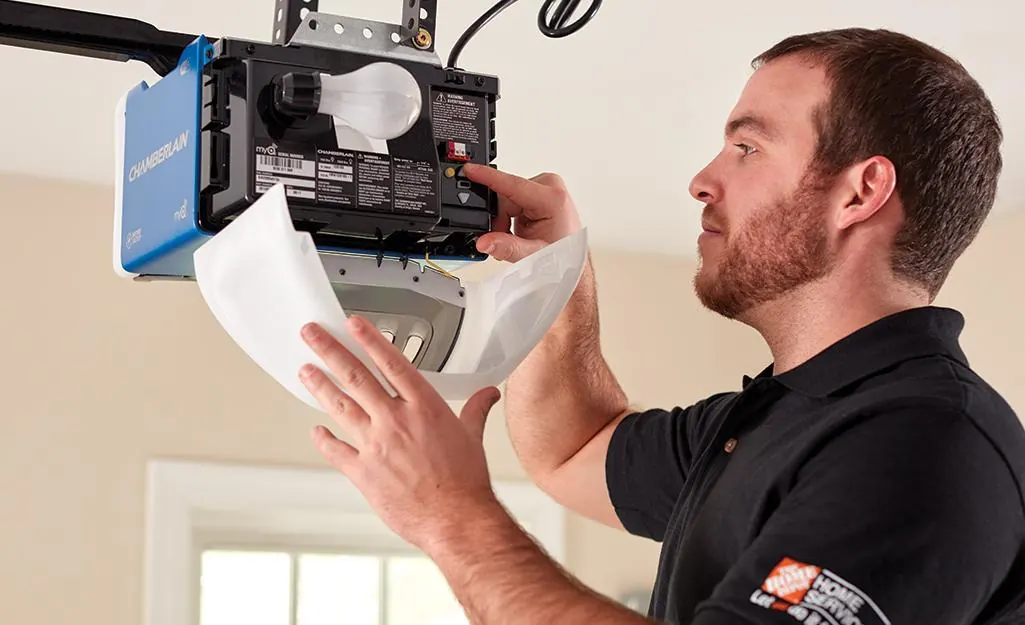
Signs Your Garage Door Opener Battery Needs Replacement
Depending on the model, warning signs may include:
- An audible warning or repeated beeping from the opener
- A battery warning light or message
- Reduced operation during a power outage
- Failure to operate on backup power despite normal operation when electricity is available
Different manufacturers use different warning indicators.
For example, some Chamberlain and LiftMaster systems provide audible or visual notifications when the backup battery needs attention.
Always consult the specific manufacturer's instructions before interpreting a warning light or replacing the battery.
Can You Add Battery Backup to an Existing Garage Door Opener?
Possibly, but compatibility is essential.
Some garage door opener models support manufacturer-approved battery backup accessories or compatible replacement components.
Others were never designed to operate with an external backup battery.
Adding an aftermarket battery or modifying electrical connections without manufacturer approval may create safety, reliability, or compliance problems.
A generic uninterruptible power supply should not automatically be assumed to satisfy California's statutory requirements.
If you have an older opener and want backup operation, check the model number and consult the manufacturer or a qualified garage door technician.
When an approved battery backup solution isn't available, installing a compliant replacement opener may be the better option.
For homeowners considering an upgrade, professional garage door opener installation can help determine which equipment is compatible with the existing door.
Is Battery Backup Worth Having If Your Opener Is Already Working?
Even when replacement isn't legally required, battery backup can offer practical benefits.
Access During Electrical Outages
If your garage serves as the main entrance to your home, an outage can interrupt normal access.
Battery backup allows a compatible opener to continue operating for a limited number of cycles, reducing dependence on manual operation.
Convenience for Families
Households with multiple drivers, older family members, or limited alternative access may find battery backup particularly useful.
A properly functioning backup system can reduce the need to manually operate a heavy garage door during an outage.
Emergency Preparedness
Power outages sometimes occur during emergencies when residents need reliable access to vehicles or their homes.
Battery backup can provide an additional option when electricity is unavailable.
However, it should not be treated as a guarantee of emergency access. A depleted battery, mechanical failure, damaged door, or other problem can still prevent operation.
Every household should understand its garage door's emergency operation procedures and maintain alternative exit routes.
Can You Manually Open a Garage Door Without Battery Backup?
Many residential garage door openers have an emergency release mechanism that allows the opener to be disconnected from the door.
When the door is fully closed, mechanically sound, and properly balanced, this may allow manual operation according to the manufacturer's instructions.
However, manual operation can be dangerous when springs, cables, tracks, or other lifting components are damaged.
Never pull the emergency release on an open or partially open garage door when the door may be improperly supported.
If a spring is broken or the door is unusually heavy, don't attempt to lift it yourself.
A battery backup system provides an alternative to manual operation during ordinary power outages, but it doesn't eliminate the need for functioning springs and other mechanical hardware.
If your garage door cannot move safely, professional garage door repair should be completed before normal operation resumes.
What Should Orange County Homeowners Look for in a Battery Backup Opener?
When selecting a new opener, battery backup compliance is a starting point rather than the only consideration.
The opener must also be appropriate for the garage door's weight, size, configuration, and operating requirements.
A quiet belt drive system may be appealing for a home with bedrooms above the garage.
A wall-mount opener may be suitable for certain garages where overhead space is limited.
Smartphone connectivity can provide useful status notifications and remote controls, although availability and functionality during a power outage depend on the equipment and network connection.
Homeowners should also consider the battery replacement process, manufacturer support, warranty terms, and availability of replacement parts.
For an attached garage in Irvine, a quieter motor and battery backup may be priorities. For a larger garage in Anaheim or Mission Viejo, compatibility with the door system may be the deciding factor.
The best opener is one that meets California's requirements and fits the way your household uses the garage.
Does a Battery Backup Garage Door Opener Require Maintenance?
Yes. Battery backup systems need occasional attention even when the opener appears to function normally.
The battery can gradually lose capacity, and warning indicators may go unnoticed if homeowners rarely inspect the equipment.
Follow the manufacturer's instructions for checking battery status and replacing the battery when required.
A qualified technician can also evaluate the opener's overall operation and the condition of the connected garage door.
This matters because battery backup cannot compensate for broken springs, damaged cables, or a door that is difficult to move.
Regular garage door maintenance helps identify mechanical problems that may affect both normal and backup operation.
What If Your Battery Backup Garage Door Opener Is Beeping?
A beeping opener may be reporting a battery-related condition, but the exact meaning depends on the model.
Some systems use different beep patterns for low battery, charging issues, or operation during an electrical outage.
Before replacing parts, check the manufacturer's manual for the specific warning.
If the battery is old or the opener reports a battery fault, a compatible replacement battery may resolve the issue.
If the warning continues after appropriate maintenance, professional evaluation may be necessary.
Don't disconnect or bypass safety components simply to silence the warning.
Garage Door Opener Battery Backup Installation in Orange County
California's battery backup requirement applies statewide, but individual homeowners have different reasons for upgrading.
In Irvine, Tustin, and Lake Forest, homeowners replacing aging openers may want quieter operation and smartphone controls along with required backup power.
In Anaheim, Fullerton, and Santa Ana, older homes may have garage door openers installed before the current requirements took effect.
For homeowners in Newport Beach, Costa Mesa, and other coastal communities, equipment condition and environmental exposure may also influence maintenance and replacement decisions.
Regardless of location, the important step is choosing equipment that complies with California law and works correctly with the existing garage door.
If you're planning an upgrade in Irvine, explore First Garage Door's local garage door services in Irvine for repair and installation options.
Why Choose First Garage Door for Garage Door Opener Installation?
Replacing a garage door opener involves more than choosing a motor with the latest features.
The new system must be compatible with the garage door, installed correctly, and tested to confirm proper operation.
First Garage Door provides residential garage door opener repair and installation services throughout Orange County.
The company works with homeowners experiencing opener failures, outdated equipment, and other garage door operating problems.
Its service process includes evaluating the existing system and providing a written estimate before approved work begins.
If you're replacing an older opener or installing a new garage door, a professional assessment can help identify suitable equipment and account for California's battery backup requirements.